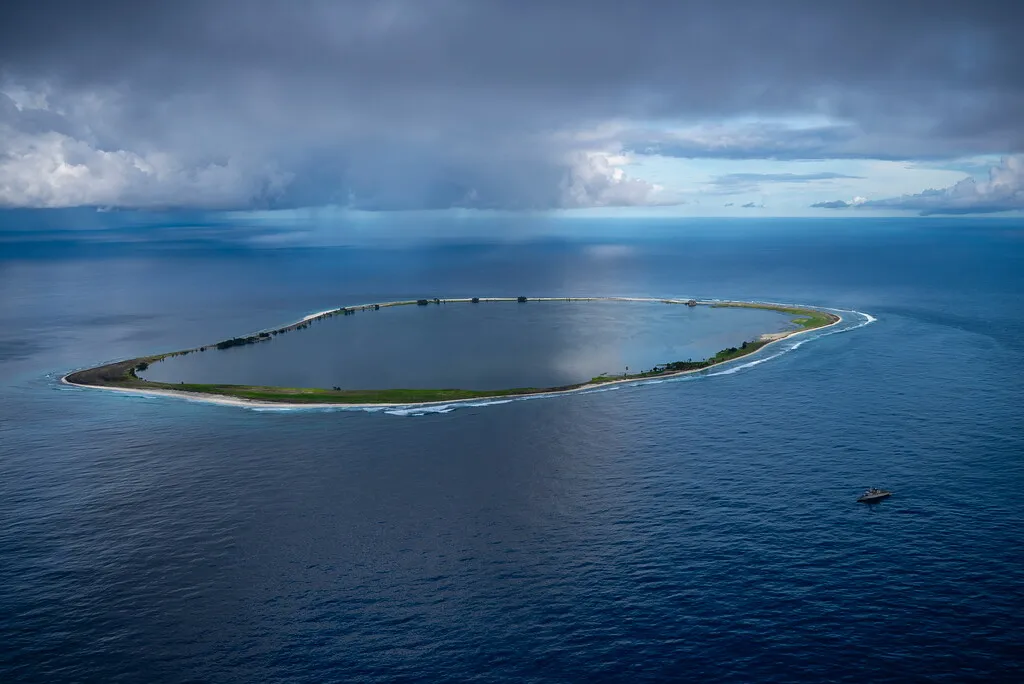
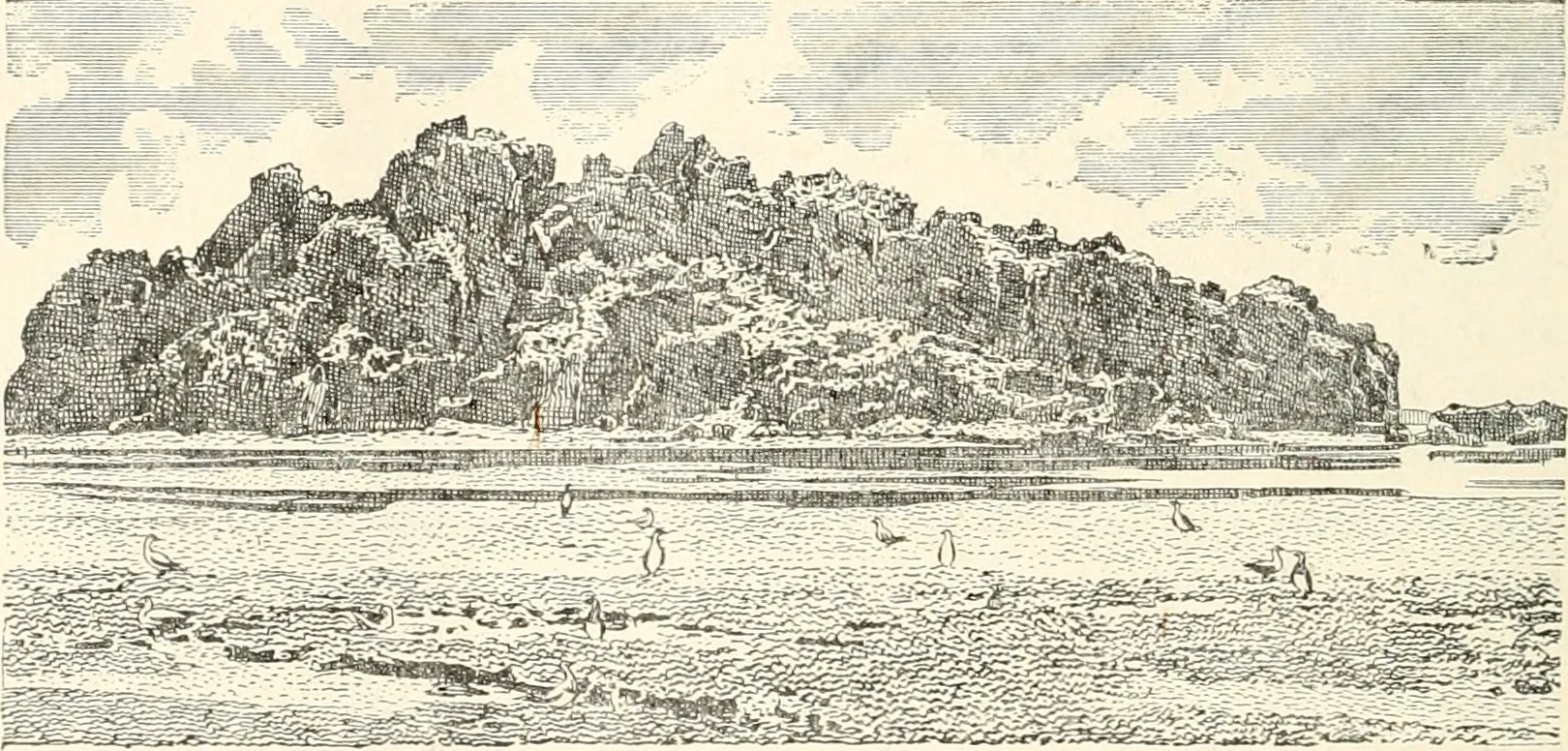
On a map of the Pacific, about 1,080 kilometers (670 miles) southwest of Mexico, there is a dot you could easily mistake for a smudge on your screen. That’s Clipperton Island: a ring of coral around a brackish lagoon, with no fresh water, no harbor and no people. The land covers 1.7 square kilometers (0.66 square miles) and rises on average two meters (6.6 feet) above the ocean. The only high ground is the volcanic Clipperton Rock, 29 meters (95 feet) tall.
An island like that shouldn’t have a history. Yet it has one of the grimmest I know. For decades France and Mexico argued over it, with the Americans and the British dropping in along the way. The garrison sent to guard it was forgotten there, together with its women and children. It ended in scurvy, drownings and a lighthouse keeper who declared himself king.
I’m writing about it for two reasons. First, it’s a story about how big politics grinds up small people. Second, Clipperton caught the eye of one more crowd: California hippies who wanted to found the world’s first nation based on LSD there. That one gets its own post, on the Brotherhood of Eternal Love.
Where is Clipperton Island and what is it like?
Clipperton lies at 10° north in the eastern Pacific. It’s 1,280 km (795 miles) to Acapulco, more than 10,000 km to Paris and about 3,300 km to the nearest French land, the Marquesas Islands. The closest land of any kind is Mexico’s Socorro Island, 945 km to the northwest.
Strictly speaking it’s an atoll with a flaw: the Rock, the remains of an old volcano, sticks out of an otherwise flat ring. The lagoon has been cut off from the ocean for about 170 years. Its water is layered and barely mixes, brackish near the surface and laden with hydrogen sulfide deeper down, and there are no fish in it. There is, however, a deep pit called Trou Sans Fond, the “bottomless hole.”
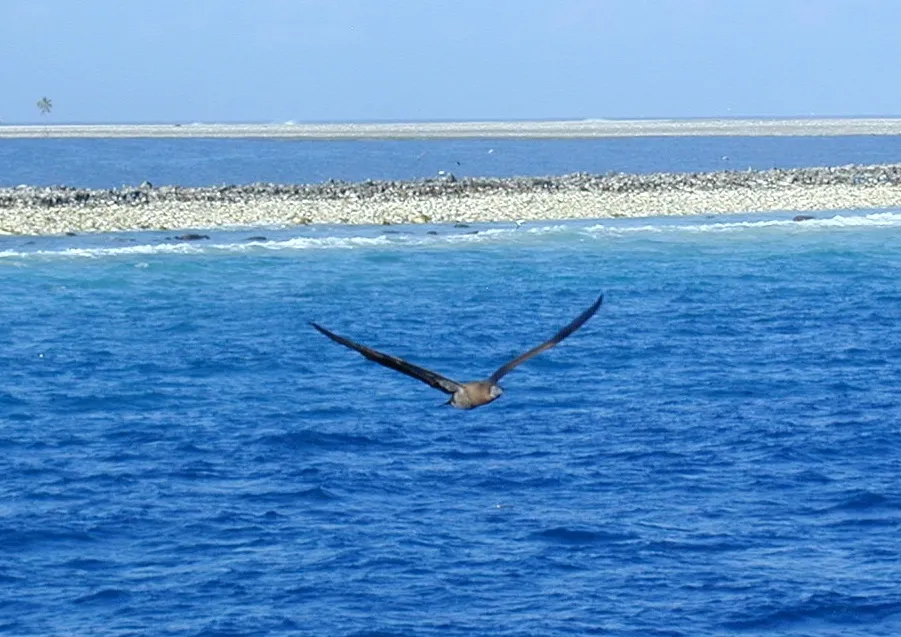
The island’s real owners are birds and crabs. Clipperton has one of the world’s largest colonies of masked boobies, and orange land crabs are literally everywhere. The humans who turn up are scientists, ham radio operators, illegal fishing crews and the French navy. Nobody lives there for good.
Île de la Passion: from Magellan to a pirate
Ferdinand Magellan may have sighted the island in January 1521, but the first map was drawn by the French. On Good Friday, April 3, 1711, the merchant captain Michel Dubocage arrived on La Découverte, followed a day later by Martin de Chassiron on La Princesse. Since it was the season of Christ’s Passion, the island was named Île de la Passion. In Spanish that’s Isla de la Pasión, which is what Mexicans call it to this day.
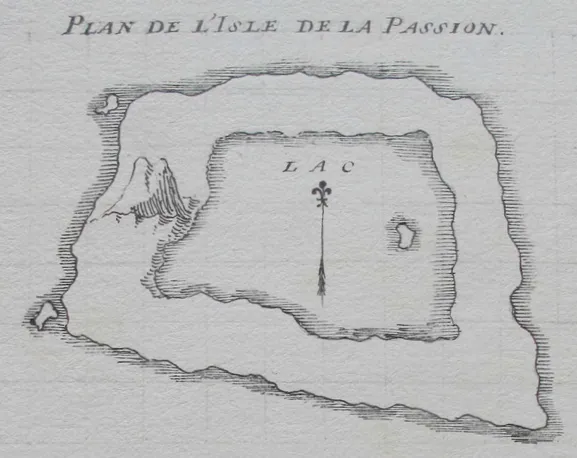
The name the rest of the world uses comes from John Clipperton, an English pirate and privateer who raided Spanish ships in the early 18th century. Legend has it that he sailed past, and the more romantic version says he used the island as a hideout. There’s no evidence for either, but a pirate legend sells better than a merchant’s logbook.
Guano: what the fight was really about
In the 19th century, islands like Clipperton had one valuable thing: bird droppings. Guano, thousands of years’ worth of dried seabird droppings, was a superb fertilizer at the time and a raw material for gunpowder. Countries and companies laid claim to uninhabited specks of land just to scrape off what the birds had left behind.
France formally annexed Clipperton on November 17, 1858, by decree of Napoleon III. The notice was published in newspapers in Hawaii, then still an independent kingdom, and that was more or less the end of any French presence. From 1895 the American Oceanic Phosphate Company mined guano there, though at its peak it had only 25 men on the island. In November 1897 French naval officers found three Americans at work. On December 13 the Mexican gunboat La Demócrata arrived, put soldiers ashore, removed the Americans and raised the Mexican flag.
Mexico argued that the island had passed to it from Spain, since Spanish sailors had seen it back in the 16th century. France replied that seeing a place is not the same as occupying it. In 1909 the two countries agreed to submit the dispute to the arbitration of the King of Italy. It took 22 years for the ruling to arrive, and in between, the island saw a tragedy.
Captain Arnaud’s Mexican garrison
In 1906 President Porfirio Díaz decided to show that Clipperton was Mexican in more than name. A lighthouse went up, and the island got a governor: Captain Ramón Arnaud, born in 1879 in Orizaba to a family of French descent. Arnaud spoke English and French, which was expected to come in handy in the dispute with France. He himself saw the posting as exile. He also had a desertion on his record, for which he had been jailed and demoted, so turning it down was not really an option.
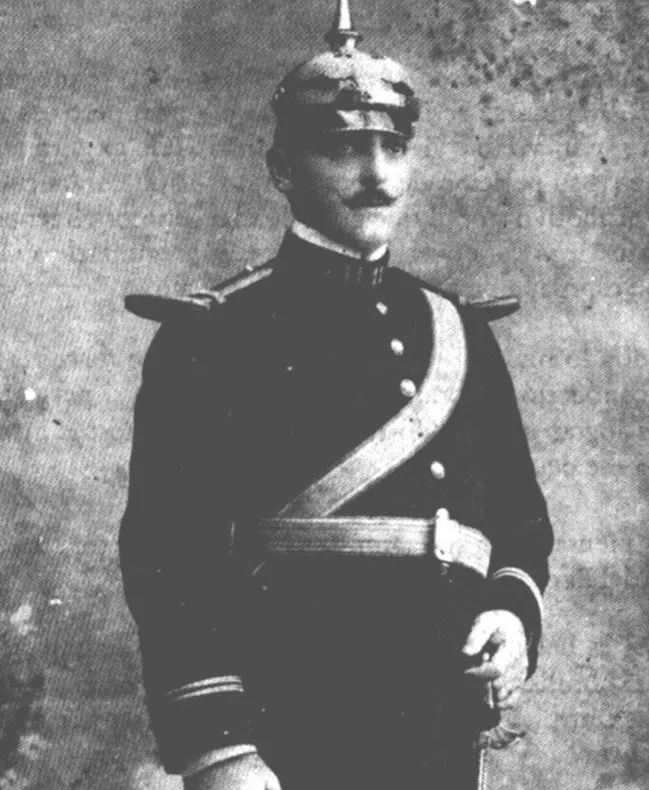
Arnaud arrived with his wife, Alicia Rovira. Over time about a hundred people came to live on the island: soldiers and their families, workers for a British guano company and the lighthouse keeper. Every two months a supply ship came from Acapulco. Life was dull and hard, but you could live it. As long as the ship kept coming.
In 1910 the Mexican Revolution broke out. Díaz had to flee the country, a succession of generals took power, and nobody in Mexico City had time for a garrison on an island no one there had ever seen. The supply ships came less and less often, and in 1914 they stopped altogether.
1914: the refusal that cost lives
On February 28, 1914, the American schooner Nokomis was wrecked on the reef. Four of its crew rowed a boat all the way to Acapulco for help. Months later the cruiser USS Cleveland arrived to collect the castaways. The Americans told Arnaud what was going on in Mexico and offered to take everyone to the mainland.
Arnaud refused. He believed a Mexican ship would arrive any day, and according to some accounts he also feared that abandoning his post would be counted as a second desertion. The only islander who left with the Americans was the guano company’s representative, a German named Gustav Schultz, who by then had reportedly lost his mind.
I find it hard to pass a clean verdict on that decision. On the one hand it’s a textbook case of loyalty to duty. On the other, Arnaud decided not just for himself but for dozens of women and children. I once wrote about where honor ends and stupidity begins in the story of the Citroën boss who sabotaged trucks for the Nazis. On Clipperton that line turned out to be deadly.
Scurvy and a boat beyond the horizon
When the supplies ran out, the islanders ate birds, eggs and fish from the reef. What they lacked was vitamin C. One by one, the men fell ill with scurvy: their gums swelled, their teeth fell out, old wounds reopened. Many of them were buried in the sand by the lagoon.
At some point a ship appeared on the horizon. Arnaud and three soldiers got into a small boat and set off after it. The ship didn’t see them, or chose not to, and on the way back the boat capsized. All four men drowned. Most sources date this to 1915, though some say 1916.
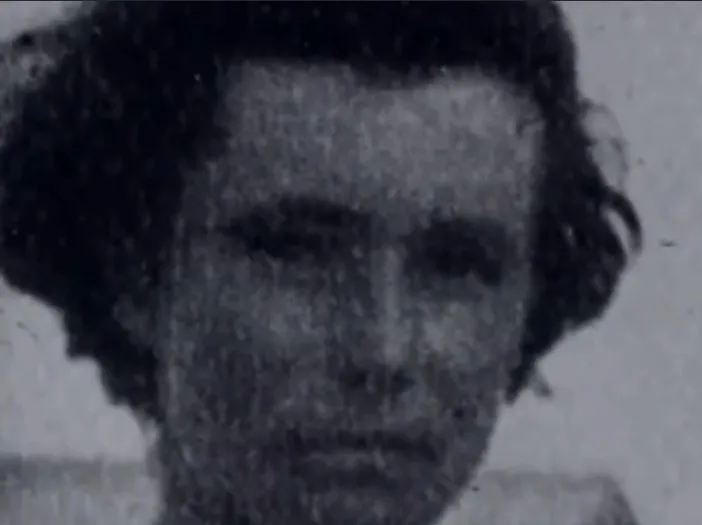
Victoriano Álvarez, the king of Clipperton
That left one adult man on the island: the lighthouse keeper, Victoriano Álvarez. Until then he had kept to himself, living alone below the lighthouse. Now he gathered up the island’s weapons, threw them into the lagoon except for one rifle he kept for himself, and declared himself king of a handful of defenseless women and children.
His reign lasted more than a year and was plain terror. Álvarez raped the women, and those who resisted were beaten or killed. The rest lived in fear and fed their children whatever they could catch on the reef. No help came, because nobody knew it was needed.
On July 17, 1917, Álvarez came for Tirza Rendón, his latest victim. Tirza and Alicia Rovira Arnaud killed him with a hammer. The next day the captain’s young son spotted a ship on the horizon.
USS Yorktown and the eleven survivors
The ship was the American gunboat USS Yorktown. The First World War was on, and the Americans were checking remote islands for German ships hiding near them. Instead of Germans, the sailors found emaciated women and children running toward them on the beach.
On July 18, 1917, the Yorktown took the last inhabitants off Clipperton: four women (Tirza Rendón, Alicia Rovira Arnaud, Altagracia Quiroz and the teenage Rosalía Nava) and seven children. Of the roughly one hundred people who had lived there a few years earlier, eleven survived.
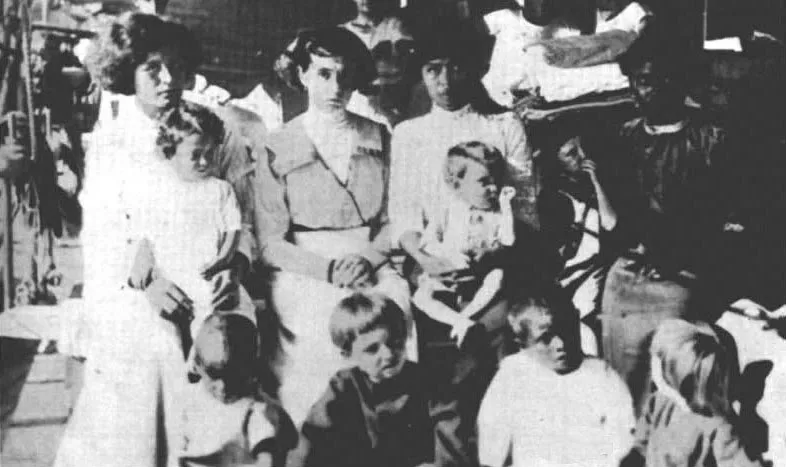
For a long time the story lived mainly in Mexico. The Colombian writer Laura Restrepo told it in her 1989 novel La isla de la pasión, published in English as Isle of Passion, which follows Ramón and Alicia Arnaud to the island. When Jacques-Yves Cousteau came to make the documentary Clipperton: The Island Time Forgot, he brought along Ramón Arnaud Jr., one of the children rescued in 1917.
The King of Italy rules: Clipperton goes to France
In 1931, 22 years after the case was filed, Victor Emmanuel III delivered his award. He held that in 1858 the island had been no man’s land and that France had taken it in line with the law of the time: it sent a ship and publicly announced the annexation. The fact that France did nothing there for decades afterward, while Mexico kept a garrison and settlers on the island, didn’t matter. France had never intended to abandon the island, the award said, and not exercising authority there didn’t mean losing the title.
Mexico complied. In 1934 it amended its constitution to drop Isla de la Pasión, and in 1935 France formally took possession. The Clipperton case is still taught in international law courses. For me it is above all a reminder that the right to own land and the right to survive on it are two different things.
Americans, pigs and the atom bomb
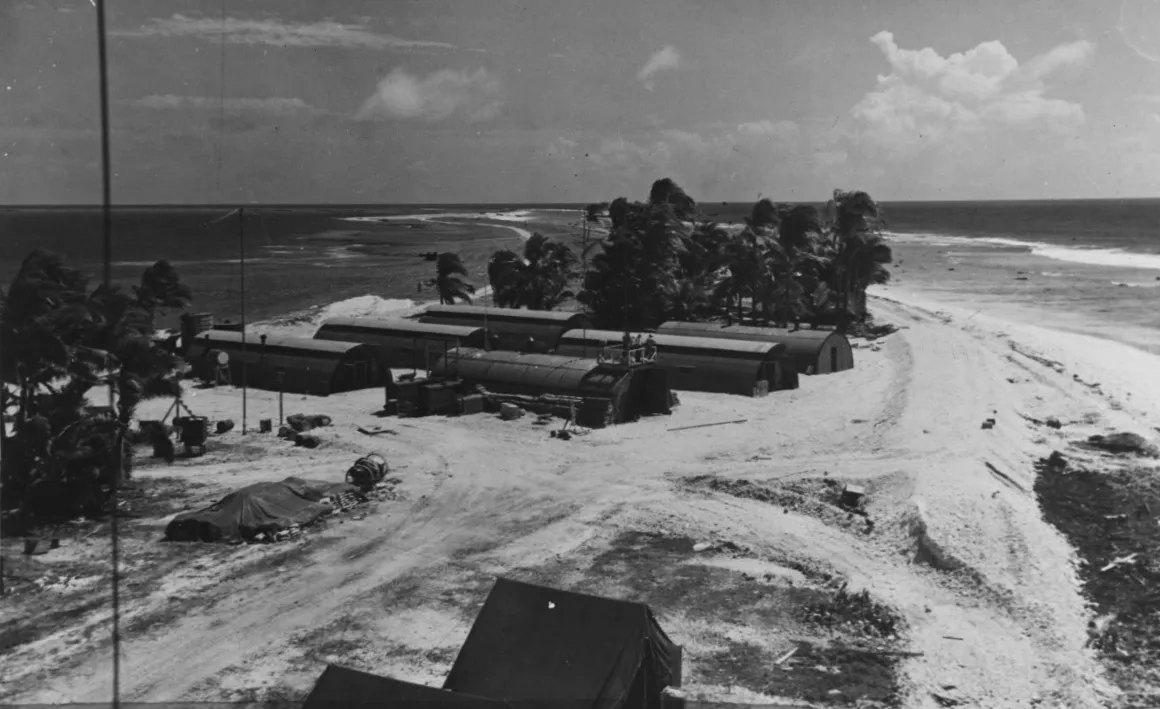
After the ruling, the island was remembered only on special occasions. In 1938 President Franklin D. Roosevelt came to fish off Clipperton, and a sponge collected around that time was later named Callyspongia roosevelti in his honor. In December 1944 the US Navy set up a weather station on the island with 24 sailors and told the French government only once it was built. France sent a formal protest, and Foreign Minister Georges Bidault called the episode “very humiliating to us.” The Americans left in October 1945, leaving behind scrap metal, ammunition and the wreck of a landing ship that had run aground on the reef.
The best thing anyone ever did for Clipperton was done in 1958 by the ornithologist Ken Stager of the Natural History Museum of Los Angeles County. He found the island overrun by feral pigs, brought in by guano miners in the 1890s. The pigs ate birds and eggs, and the booby colonies were down to about 500 brown and 150 masked boobies. Stager took a shotgun and killed all 58 pigs. By 2003 some 112,000 masked boobies and 25,000 brown boobies were nesting there. His story later inspired the founding of Island Conservation, a group that removes invasive species from islands around the world.
After losing Algeria in 1962, the French military looked at Clipperton as a new nuclear test site. The idea was dropped because of the climate and the distance, but from 1966 to 1969 France sent the “Bougainville” missions to the island, which measured fallout from its nuclear tests in the Pacific. In the 1980s there were plans for a fishing port, an airstrip and settlers from French Polynesia. They all ended as feasibility studies.
Clipperton today: a plaque, a flag and plastic
Today Clipperton is uninhabited French state property, administered directly by the Minister of the Overseas. Since 2022 its official name has been La Passion–Clipperton, a nice nod to its history. About once a year a French navy ship calls on what are known as the “Passion” missions: the sailors restore the plaque, raise a new flag and pick up trash. In 2023 they collected more than 200 kg of plastic from the beaches, plus a bale of cocaine that the sea had washed ashore.
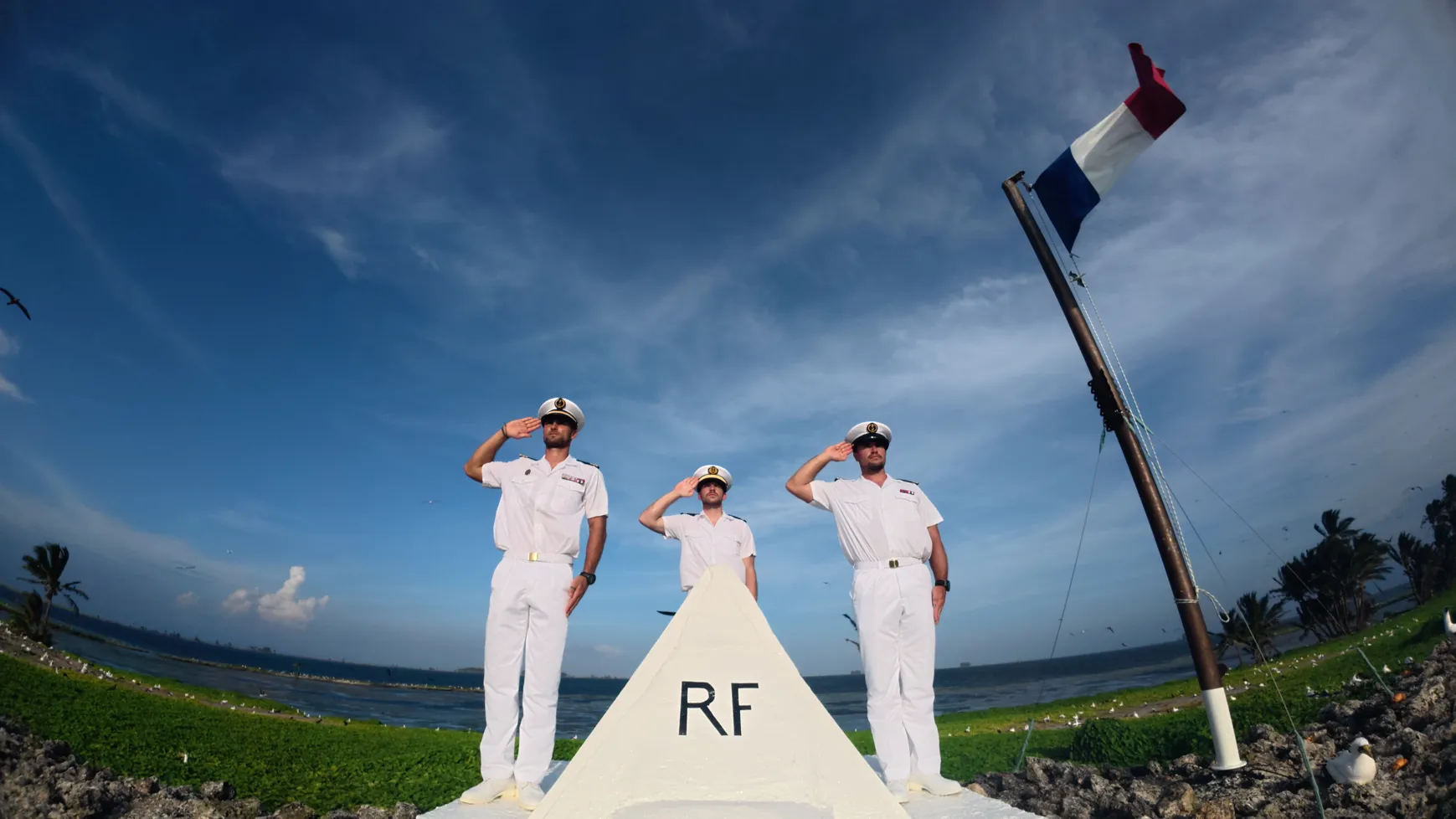
Why does France care about this dot on the map? Because of the sea. Since 2018 the exclusive economic zone around Clipperton has covered 431,273 square kilometers, which is larger than Germany and a little larger than California. The seabed holds polymetallic nodules, and the waters are rich tuna grounds, where illegal fishing is hard to stop with a patrol that comes by now and then. To keep those rights, you have to show from time to time that the island is in use. Hence the annual visit and the salute at the plaque.
My take
What strikes me most about this story is the contrast between two scales. On one side are states that spent decades arguing over a scrap of coral, hiring lawyers and waiting for a king’s verdict. On the other is a handful of people sent there in the name of one of those states, and forgotten by it as soon as it had more important things to do.
The 1931 award says France owned the island the whole time. If so, the owner went decades without even checking whether anyone on its land was starving. And the people who actually lived and died there didn’t count at all in the dispute over who owned it.
Clipperton has one more strange chapter. Half a century after the garrison died out, two Americans from the California hippie scene leaned over an atlas and decided it was the perfect spot for an independent nation built on LSD. It sounds like a joke, but they even sent a man to Europe to look into buying it. I tell that story in my post on the Brotherhood of Eternal Love.
Sources
- Clipperton Island, Ramón Arnaud and Clipperton Island case on Wikipedia; Île Clipperton on the French Wikipedia (the 1917 dates and the Bougainville missions).
- The Tyrant of Clipperton Island, Damn Interesting (Álvarez’s reign and the rescue).
- Kenneth E. Stager on Wikipedia (the pigs and the boobies).
- Laura Restrepo, Isle of Passion, translated by Dolores M. Koch (Kirkus Reviews, 2005).
Image sources
All images come from Wikimedia Commons:
- Clipperton from a helicopter, 2026 and sailors at the plaque, 2025: Marine nationale, Licence Ouverte.
- Plan of Île de la Passion, 1711: public domain.
- Clipperton Rock, 1899: engraving from the Bulletin of the Museum of Comparative Zoology, CC0.
- Captain Ramón Arnaud, Alicia Rovira Arnaud and the survivors aboard USS Yorktown: public domain.
- US Navy camp, 1944: Naval History and Heritage Command, public domain.
- Booby over the lagoon, 2000: Shannon Rankin, NOAA, public domain.


Questions people ask
Who owns Clipperton Island?
France. Its dispute with Mexico was settled in 1931 by the arbitration of King Victor Emmanuel III of Italy. Today the island is French state property administered directly by the Minister of the Overseas, and since 2022 its official name has been La Passion–Clipperton.
Does anyone live on Clipperton Island?
No. Nobody has lived there permanently since 1917, apart from a US Navy weather station in 1944 and 1945, French missions in the 1960s and short scientific expeditions. A French navy ship visits about once a year to look after the plaque and the flag.
What happened on Clipperton Island in 1917?
A Mexican garrison cut off from supplies during the Mexican Revolution died out from scurvy and accidents. The last man, the lighthouse keeper Victoriano Álvarez, declared himself king and terrorized the women until they killed him. The next day, July 18, 1917, the USS Yorktown took off four women and seven children.
Why is it called Clipperton Island?
After John Clipperton, an English pirate and privateer of the early 18th century who, legend says, used the island as a hideout. The French had named it Île de la Passion after reaching it on Good Friday in 1711.