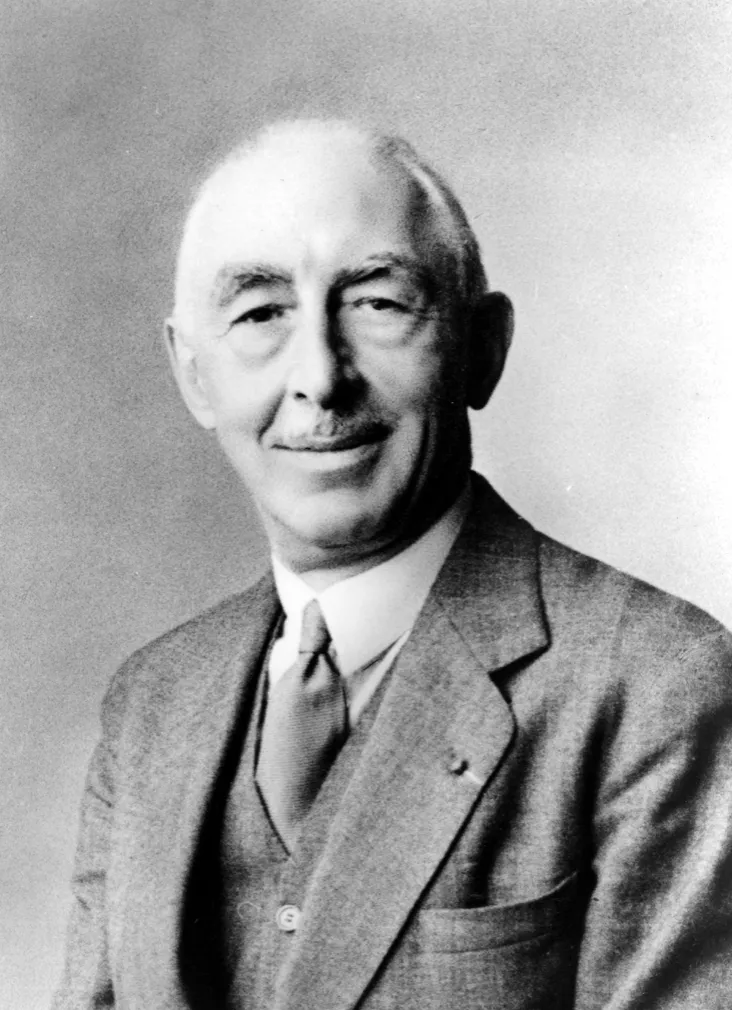
There is a tempting way to judge people who lived under a bad regime: check whom they worked for and stop there. A party card in the drawer? Collaborator. A factory that produced for the enemy? Traitor. It saves you the trouble of critical thinking, and it gets history wrong surprisingly often.
When I first wrote about Pierre-Jules Boulanger in 2019, the story of how Citroën’s boss built trucks for the Wehrmacht with a rigged oil dipstick had just gone around the internet again. Seven years later I find it even more useful, because it poses a question we still answer badly: where does honor end and stupidity begin? My answer is that honor doesn’t have to be stupid, and refusing to work for the enemy is not the only decent option.
Who was Pierre-Jules Boulanger?
Pierre-Jules Boulanger was born on March 10, 1885, in Sin-le-Noble in northern France. In the First World War he served as an aerial photographer, finished the war as a captain and was decorated with, among other things, the Legion of Honor. In 1918 he went to work for Michelin. When Michelin became Citroën’s main shareholder in December 1934, Boulanger became vice president and head of engineering and design. After the death of his friend Pierre Michelin in 1937, he took over as president.
He was a man of iron principles and terrible relations with the occupiers. He refused to deal directly with the German authorities and wouldn’t even meet Ferdinand Porsche. His story is told by John Reynolds in a book about the Citroën 2CV, and in July 2019 it was revived by Jalopnik.
The Citroën T45: trucks for the Wehrmacht
In the Second World War the Germans occupied France and put its factories to work for their army. Citroën’s plants made the Citroën Type 45 truck. The model went into production in 1934, with a 4.6-liter six-cylinder gasoline engine and a payload of 3.5 tonnes in the short version. The French army ordered it in large numbers only after the war broke out, and received more than 4,000 before France fell in 1940.
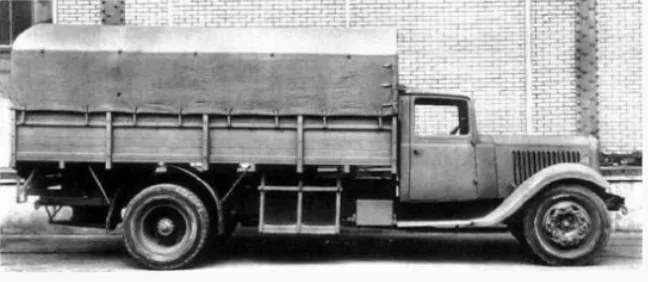
After seizing the plant on the Quai de Javel in Paris, the Germans built T45s there for the Wehrmacht. According to figures collected on the French Wikipedia, more than 18,500 of them were made between 1941 and 1945. In the eyes of armchair moralists, the workers, with Boulanger at their head, should have refused, been shot and gone down in history as heroes. Boulanger chose another way: he agreed to production and decided to play games with the occupiers.
How did the oil dipstick sabotage work?
Citroën’s president knew that loose wheel nuts or any other easy-to-spot defect would come to light quickly, and then there would be a showdown with furious Germans. According to Reynolds, he first told the workers to take their time. Then he came up with something cleverer: he had the notch on the dipstick, the one you use to check the oil level, moved a little lower.
The dipstick showed there was enough oil when in fact there was too little. German mechanics had no reason to suspect anything. The truck ran normally for a while, until its engine seized somewhere on the road, often far from any workshop. By then it was too late to fix anything, and too late to work out who was to blame.
In fairness, we don’t know how widespread this was, and the story rests largely on one book. The author of the Jalopnik piece himself admits it could be apocryphal, though he chooses to believe it. What we do know is that Boulanger’s name was on a German list of “enemies of the Reich” who were to be arrested if the Allies invaded.
The 2CV, the car hidden from the Germans
Boulanger’s approach had another advantage: he survived the war and ran Citroën until 1950. Back in 1936 he had launched the TPV project (Très Petite Voiture, “very small car”), a cheap “umbrella on four wheels.” It was supposed to carry four people and 50 kg (110 lb) of farm goods to market and to cross a freshly plowed field with a basket of eggs without breaking any.
During the occupation the prototypes were hidden from the Germans. Several were buried, one was disguised as a pickup and the rest were destroyed. Three of them turned up only in the 1990s, in a barn at Citroën’s test site in La Ferté-Vidame. The 2CV made its debut at the Paris Motor Show on October 7, 1948, and the last one was built in Portugal in July 1990. More than 3.8 million were made, and in 1981 a yellow 2CV even got a part in the James Bond film For Your Eyes Only.
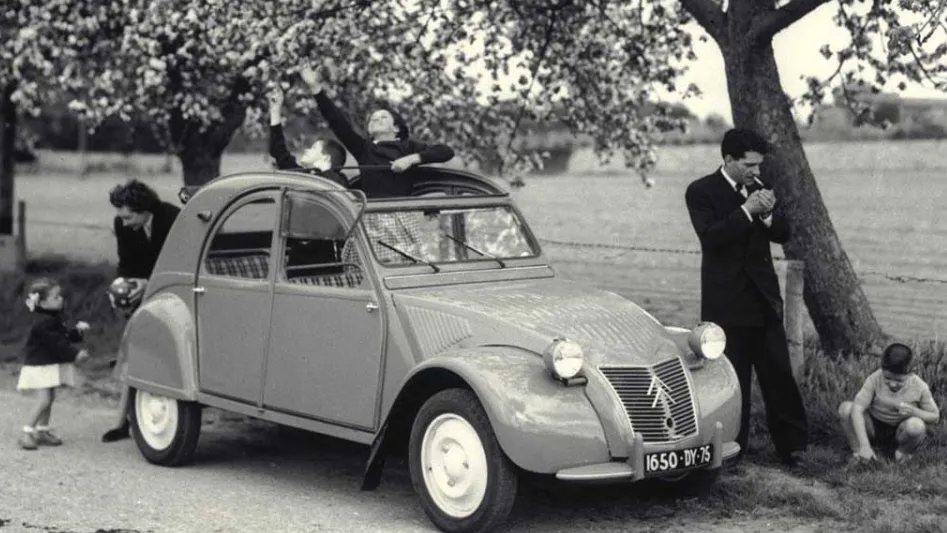
Boulanger was killed on November 12, 1950, in a crash in a Citroën Traction Avant on the main road from Clermont-Ferrand to Paris. He didn’t live to see the 2CV become one of the most recognizable cars in the world.
Louis Renault: the other side of the coin
To appreciate Boulanger’s choice, look at the competition. Louis Renault also produced for the Germans. Over four years his factories supplied the occupiers with 34,232 vehicles, and he argued that by keeping them running he had saved thousands of workers from being sent to labor in Germany.
After the liberation, on September 22, 1944, Renault was arrested on charges of collaboration. He died a month later, on October 24, while still awaiting trial. The cause of his death has never been clearly established. A decree of January 1, 1945 nationalized his company as the Régie Nationale des Usines Renault. In 2011 his heirs were still fighting in court to restore his reputation.
Both men built trucks for the Wehrmacht. One went down in history as a clever saboteur, the other as a collaborator. Part of the difference comes from the facts: Boulanger avoided the Germans and slowed production down. But part of it comes from who told the story and when. Judging people from the occupation years is rarely as simple as the people handing out labels would like.
What did the Allies tell workers in occupied Europe to do?
The funniest part is that the Allies wrote Boulanger’s method down. In January 1944 the Office of Strategic Services (OSS), the wartime forerunner of the CIA, issued the Simple Sabotage Field Manual for “citizen-saboteurs” in occupied Europe: ordinary people who could hurt the enemy with whatever was at hand, at minimal risk of being caught.
In places it reads like a description of Citroën’s assembly line. The section for employees opens with “Work slowly.” Managers are told to refer every matter to committees “for further study and consideration.” On trucks it is blunt: disconnecting the oil pump “will burn out the main bearings in less than 50 miles of normal driving.” And saboteurs should pick acts “for which large numbers of people could be responsible,” which describes a dipstick marked a few millimeters too low perfectly. There is no sign Boulanger ever saw the manual, which was secret.
Occupied Poland had its own version. Its underground “minor sabotage” movement, with the scout leader Aleksander Kamiński among its key organizers, counted slow, sloppy work for German employers among its standard methods and adopted the turtle as the symbol of it (Wikipedia). To the Allies and the resistance, a worker who did his job for the Germans slower and worse than he could was part of the fight, not a traitor. The same logic protected Boulanger.
What has changed since 2019?
On the evidence, nothing: the dipstick story still rests mainly on Reynolds’ book. The audience has changed, though. The CIA declassified the OSS manual in 2008, and in January 2025 it went viral, briefly ranking fifth among the most-read books on Project Gutenberg (404 Media). Many readers saw in it a portrait of the modern office. I see confirmation that Boulanger’s quiet, deniable resistance was exactly what the Allies were asking for.
My take: honor doesn’t have to be stupid
When the Berlin Wall fell, East Germany’s ruling party still had more than two million members, roughly one adult in six (Wikipedia). Among them were cynics, careerists and informers, but also engineers, doctors and teachers who simply wanted to do their jobs and now and then fix something in the system. Throwing them all into one bag marked “communist” seems to me about as wise as calling Boulanger a collaborator because his factory built trucks for the Wehrmacht.
I believe honor can be reconciled with common sense. Sometimes the bravest thing is to survive: to hurt the enemy where it hurts most, and after the war to build something good. A similar dilemma, with a far darker ending, faced the Mexican captain Ramón Arnaud on Clipperton Island. In a polarized age it’s worth judging people by what they did, not by the card in their drawer.
Of course, Pierre-Jules could have refused to cooperate and let himself be shot. Then after the war the French would have driven Volkswagen Beetles to lay flowers at the monument to the brave Boulanger.
Sources
- Pierre-Jules Boulanger, Citroën 2CV and Louis Renault on Wikipedia; Citroën 45 on the French Wikipedia.
- John Reynolds, Citroën 2CV; Jason Torchinsky, Citroën sabotaged wartime Nazi truck production in a simple and brilliant way, Jalopnik (2019).
- Office of Strategic Services, Simple Sabotage Field Manual (1944), full text on Project Gutenberg; CIA, The art of simple sabotage (2019); 404 Media on the manual going viral (2025).
- Minor sabotage and Socialist Unity Party of Germany on Wikipedia.
Questions people ask
Who was Pierre Boulanger of Citroën?
Pierre-Jules Boulanger (1885–1950) was a French engineer and manager who ran Citroën from 1937 until his death in a car crash in 1950. He started the project that became the Citroën 2CV, and during the German occupation he slowed down and sabotaged truck production for the Wehrmacht.
What was the Citroën T45?
The Citroën Type 45 was a truck built from 1934 to 1954, with a 4.6-liter six-cylinder gasoline engine and a payload of 3.5 tonnes in the short version. During the occupation the Germans had it built for the Wehrmacht at the seized Citroën plant on the Quai de Javel in Paris.
How did Citroën sabotage trucks for the Germans?
According to John Reynolds’ book on the Citroën 2CV, Boulanger had the notch on the oil dipstick moved lower. The dipstick showed a full level while the engine was short of oil, so the truck broke down only after some time on the road. Nobody knows how many trucks were affected.
What is the Simple Sabotage Field Manual?
A secret 1944 guide from the OSS, the wartime forerunner of the CIA, that taught ordinary people in occupied Europe how to slow down the enemy’s war effort with small, deniable acts, from working slowly to sabotaging lubrication. The CIA declassified it in 2008.