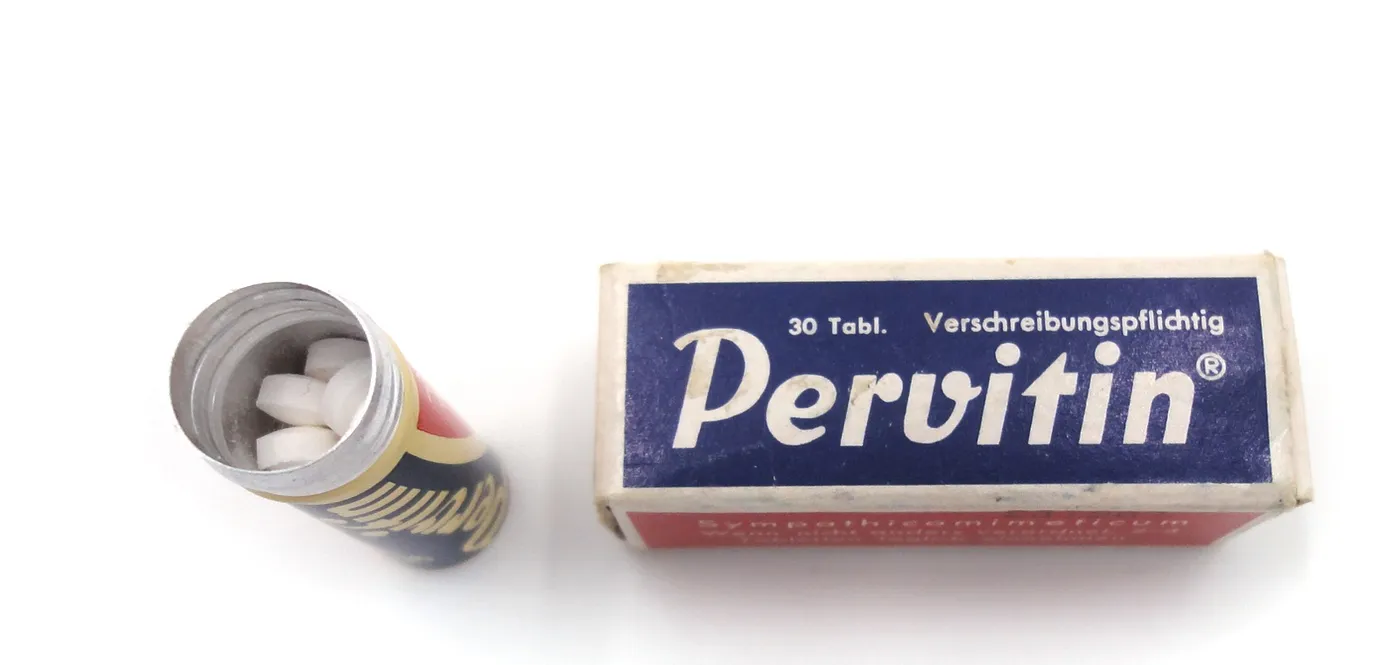
In 1938 you could walk into a German pharmacy and buy a tube of tablets for tiredness and the blues. They were called Pervitin, the Berlin firm Temmler made them, and each one contained 3 mg of methamphetamine hydrochloride. That is the same substance we now know as crystal meth. A year later the tablets rode with the Wehrmacht into Poland, and in the spring of 1940 the army high command issued an order setting out how many to take before a night march.
All of this is true and well documented. But Pervitin has gathered so many legends that it’s hard to tell the history from the memes: meth chocolates for housewives, a blitzkrieg won on a high, atrocities explained by pills. I checked which of these survive contact with the sources. Fewer than the popular articles suggest.
At the end I explain why the subject is current again. Methamphetamine is coming back to Europe, this time from industrial labs, some of them run with the help of Mexican cooks.
A caveat first: this is a history piece. Methamphetamine is a controlled drug almost everywhere (Schedule II in the United States, Class A in the United Kingdom, and listed in Schedule II of the UN Convention on Psychotropic Substances), and it is highly addictive.
What was Pervitin?
Pervitin was developed at Temmler by the chemist Fritz Hauschild. The company filed a patent on its production method on October 31, 1937, and the drug reached pharmacies at the turn of 1937 and 1938 (chemie.de). It came in tubes of 30 tablets. Temmler advertised it as a stimulant for the nervous system and the circulation, which in practice meant a remedy for fatigue, gloom and sluggishness.
It worked the way methamphetamine works. It chased away sleepiness, added energy and self-confidence, and lifted the mood. The price was the crash, and with longer use came insomnia, palpitations and, in some people, psychosis. German doctors described all of this while the war was still going on.
Who took it? According to historians of medicine, Pervitin was popular with exhausted night-shift workers, and young people took it for fun (Defalque and Wright, 2011). Doctors prescribed it to office clerks, factory workers and housewives. In 1942 a pack of 200 tablets cost about 7 Reichsmarks (Psychiatric Times).
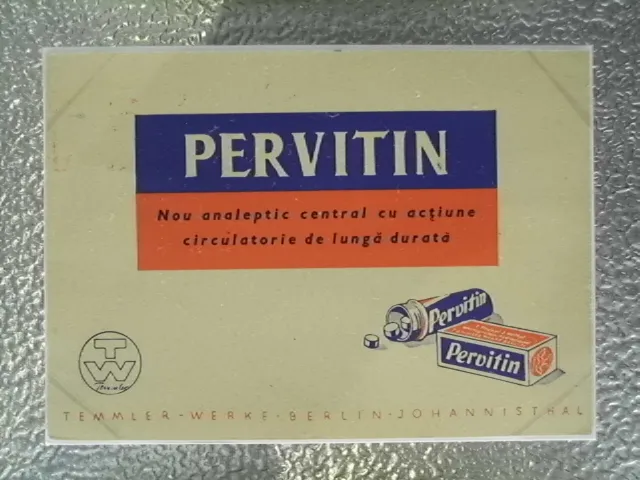
The interesting part is that this was not a government project. The Dutch historians Stephen Snelders and Toine Pieters showed that Pervitin spread through German society because it met ordinary people’s needs: work longer, sleep less, feel better. Nobody forced it on the nation from above (Social History of Medicine, 2011). Defalque and Wright add that there is no evidence of a program to build drug-fueled supermen, and that the Reich Health Leader, Leonardo Conti, actively warned people off Pervitin.
Could you buy Pervitin without a prescription?
At first, yes. For its first months on the market it was sold in pharmacies without a prescription (Ärzte Zeitung). Some historians point out, though, that over-the-counter sales happened only in some pharmacies and were never widespread (German History in Documents and Images).
After that the rules were tightened in three steps:
| Date | What happened |
|---|---|
| April 1939 | Leonardo Conti becomes Reich Health Leader. Over time he turns into Pervitin’s main opponent. |
| November 1939 | Pervitin becomes prescription-only for civilians. The rule doesn’t apply to soldiers, and many pharmacies ignore it. |
| June 12, 1941 | A regulation adds Pervitin and the American Benzedrine to the Opium Law, effective July 1, 1941. |
The dates come from a timeline in the Japanese law journal Hōsei Kenkyū (2022), based on the work of Norman Ohler and Dieter Bollinger, and from the German daily taz.
The prescription requirement changed little. According to Ohler, civilian consumption kept growing after 1941. Yet official statistics for 1942 recorded only 84 people addicted to Pervitin, against 2,384 addicted to morphine. Those two numbers are hard to square. My suspicion is that nobody bothered to count people swallowing a pill their family doctor had prescribed.
Did the Nazis make meth chocolate?
This is the most repeated Pervitin factoid. The Berlin chocolate maker Hildebrand supposedly sold pralines with 14 mg of methamphetamine each, advertised to housewives as a way to make the housework go faster. A photo of a box labeled “Panzerschokolade” even circulates online.
The photo is a fake. The box uses the lettering of the Austrian chocolatier Zotter, founded in 1987, and the company has stated officially that no such product ever existed (Zotter). The British magazine The Skeptic went through the available sources and found no photograph, no packaging and no diary entry that would confirm meth chocolates ever existed (The Skeptic, 2022).
The Hildebrand praline story leads back to Norman Ohler, author of the bestseller Blitzed: Drugs in Nazi Germany (German original Der totale Rausch, 2015). In one interview he spoke of 15 mg per piece; other texts give 14 or 13 mg. Nobody has produced an ad or a box. For the record, 14 mg is almost five Pervitin tablets in a single chocolate. A housewife on that dose wouldn’t tidy the apartment. She would be redecorating it at three in the morning.
Two related things are true, though. Hildebrand made Scho-Ka-Kola, a dark chocolate with coffee and kola nut that was issued to soldiers and airmen, and its kick came from caffeine. And “Panzerschokolade” (tank chocolate) was a soldiers’ nickname for Pervitin tablets, along with “Stuka-Tabletten” and “Hermann-Göring-Pillen” (Wikipedia).
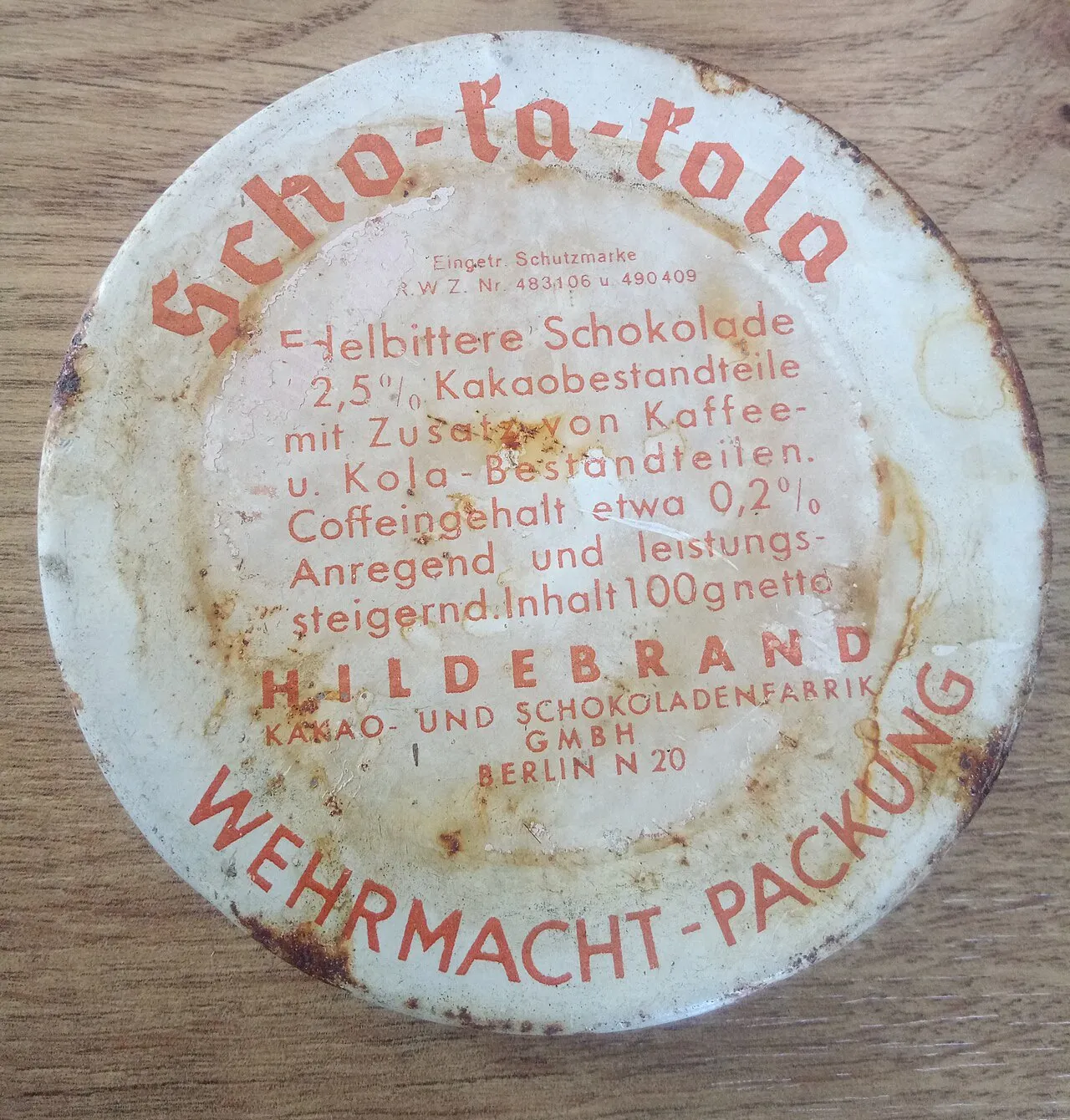
I think someone, years later, glued these two true things together into one better story. Until someone produces an ad or a box, I treat meth chocolates as a legend. It’s a good example of why critical thinking matters: the better a factoid sounds, the harder you should look at where it came from.
Did German soldiers take Pervitin in the invasion of Poland?
The military took an interest in Pervitin before the war. The physiologist Otto Ranke, head of the institute of defense physiology at the military medical academy in Berlin, tested it on about 90 cadets. He concluded that the tablets let people function for a long time without sleep. Years later he admitted that he took them every day himself (TIME).
When Germany invaded Poland on September 1, 1939, starting the Second World War in Europe, the army was not yet issuing Pervitin officially. Tablets reached the troops on the responsibility of individual officers and doctors. Ohler quotes army doctors who reported euphoria and a “hunger for action” among soldiers after the campaign. The strongest evidence is indirect, though: in its order of April 1940, the German high command itself wrote that the Polish campaign had shown how much success can depend on overcoming the troops’ fatigue.
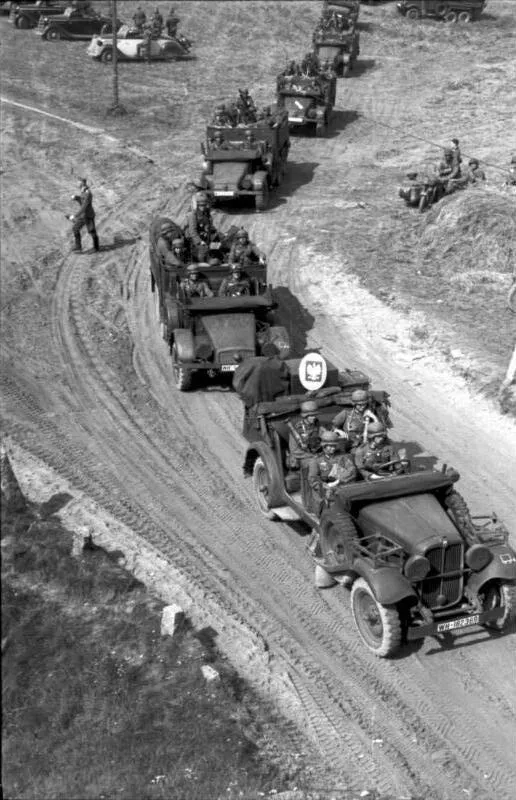
Nobody knows how many tablets went to Poland. The Polish historian Łukasz Kamieński, author of Shooting Up: A Short History of Drugs and War, writes that Temmler supplied the military with 29 million tablets between April and December 1939, and that many of them were used “experimentally” in Poland (War on the Rocks). Other accounts give lower figures and later delivery dates.
Did Heinrich Böll beg for Pervitin from the front in Poland?
Many articles about Pervitin mention Heinrich Böll, the future Nobel laureate in literature, who supposedly wrote home from the front in Poland asking his parents for the tablets. The letters exist, but the front doesn’t fit. Böll was drafted at the end of August 1939 and trained at a barracks in Osnabrück, in northwestern Germany, until June 1940 (Deutsche Biographie).
From there, on November 9, 1939, he wrote home: “Heute schreibe ich hauptsächlich um Pervitin,” meaning “Today I’m writing mainly about Pervitin.” More requests followed in May and July 1940, the second from barracks in Bromberg (today Bydgoszcz) in occupied Poland, long after the fighting there was over.
So the letters don’t prove drug use in combat. They show something else that is just as telling: a recruit took methamphetamine to get through grueling training, and his family bought it for him at an ordinary pharmacy.
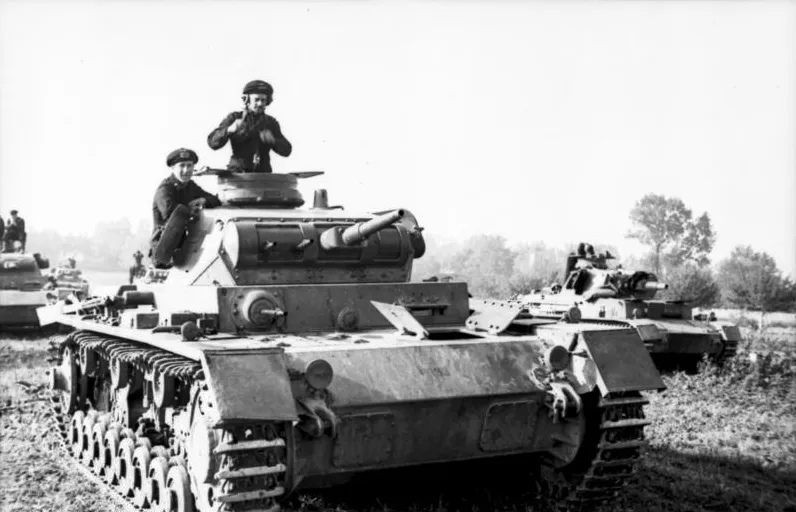
Blitzkrieg on meth? France, 1940
On April 17, 1940, the army’s commander-in-chief, Walther von Brauchitsch, signed the so-called Weckmittelerlass, the “stimulant decree.” Ranke wrote the text. According to Ohler, it went to about a thousand unit doctors, several hundred corps doctors and the medical service of the Waffen-SS. It set doses for day and night, with a top-up after a few hours if the march went on. Pervitin became standard medical equipment.
Popular articles cite 35 million tablets for the Wehrmacht and the Luftwaffe between April and July 1940. That figure comes from Ohler. Other studies speak of 14 million for the army in April and 28 million by the end of the year. Either way, we’re talking about tens of millions.
In May 1940 German armored divisions pushed through the Ardennes, which the French considered impassable for tanks, and crossed the Meuse at Sedan. Ohler writes that Heinz Guderian told his men to go without sleep for three days if necessary, and that Erwin Rommel’s division received 40,000 tablets. We know these details only from his book, though. I couldn’t find an independent study that confirms them.
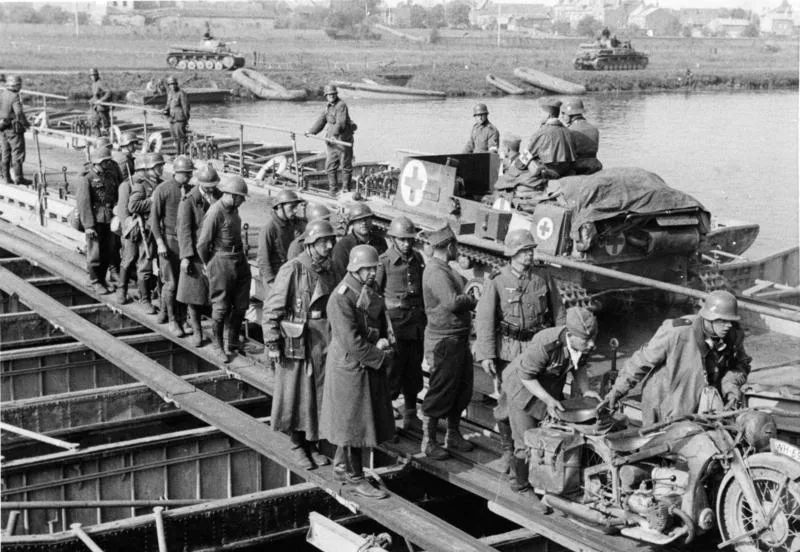
Did Pervitin win the Battle of France? Historians who reviewed Ohler’s book say no. They note that everyone working on the subject has thin data to go on and can easily overrate the role of amphetamines (British Journal for Military History, 2017). Roger Moorhouse finds it hard to defend explaining military events through drugs (Moorhouse). Richard J. Evans, one of the leading historians of the Third Reich, called the book “a crass and dangerously inaccurate account” (The Guardian, 2016).
There’s also a simpler argument. Everybody took amphetamines. The British used about 72 million Benzedrine tablets during the war, the Americans between 250 and 500 million by Kamieński’s estimate, and Japan’s military pushed up methamphetamine production for its pilots and night-shift workers (UNODC). If pills won wars, the Allies had more of them. My view is that Pervitin may have helped keep columns moving at night, but the campaign was won by the plan, by concentrating the armor in one place and by Allied mistakes.
Does Pervitin explain Wehrmacht atrocities?
The theory is tempting: sleepless soldiers, wired on methamphetamine and full of aggression, so they killed. Methamphetamine really can cause aggression and psychosis. The Swiss psychiatrist John Staehelin described “Pervitin psychosis” as early as 1941 (Staehelin, 1941), and German doctors wrote about addiction (Dittmar, 1943).
The sources don’t back the theory, though. Start with Poland. The historian Jochen Böhler of the German Historical Institute in Warsaw calculated that in September 1939 the Wehrmacht killed at least 16,000 civilians and 3,000 prisoners of war in executions and arson, while shelling and bombing killed at least another 10,000 civilians. As causes he names the anti-Semitic and anti-Slavic attitudes drilled into soldiers before the war, and an imaginary fear of partisans who, in Poland at the time, simply didn’t exist (Böhler, 2007). Drugs play no part in his analysis.
The same pattern ran through the rest of occupied Europe, and it was driven by orders, not pills. Weeks before the invasion of the Soviet Union in June 1941, the high command issued the Barbarossa decree, which exempted German soldiers from prosecution for crimes against Soviet civilians and prisoners, and the Commissar Order, which called for captured Red Army political officers to be shot. Of the 5.7 million Soviet soldiers taken prisoner during the war, at least 3.3 million died in German hands. In occupied Serbia, under orders to shoot 100 hostages for every German soldier killed, the Wehrmacht murdered more than 2,700 civilians in Kragujevac in October 1941 (Wikipedia). None of that needed methamphetamine. It needed paperwork.
I also found no documented case that ties a specific crime to Pervitin. The Wehrmacht’s discipline problem was alcohol, and Brauchitsch blamed drink for the loosening of discipline after the French campaign. In a military archive of autopsies from 1939 to 1944, 1,792 of 5,316 cases were deaths linked to alcohol or drugs, but only 156 were linked to drugs. Among the 120 deaths in which the substance was identified, Pervitin appears 11 times, barbiturates 68 times and morphine 24 times (Steinkamp, 2008).
One more point. The British and Americans gave their soldiers amphetamine precisely because it boosted confidence and aggression (Rasmussen, 2011). If pills are supposed to explain exceptional cruelty, you would have to pin it on the Allies too.
Bombing the Polish town of Wieluń, its hospital included, in the first hours of the war, or shooting prisoners, required no methamphetamine. Ideology and orders were enough. Explaining crimes with chemistry is convenient because it takes the responsibility off people. That is exactly what Evans held against Ohler’s book: that it hints Germans, and even Hitler, were not fully responsible because they were drugged. Ohler has defended his work.
What happened to Pervitin after the war?
Germans kept taking it until the end of the war. As early as August 1942, a US military intelligence bulletin reported that Luftwaffe personnel were using it (Tactical and Technical Trends). Armies went on experimenting with drugs after 1945 too, as I describe in my post on LSD, the CIA and Tusko the elephant.
Methamphetamine left marks in several countries after the war. In Japan, where it was sold as Philopon, an epidemic ran from 1946 to 1956. In 1954 alone, 55,000 people were arrested for stimulant offenses (UNODC). In Czechoslovakia, from the 1970s on, people cooked methamphetamine in home labs from ephedrine and cold medicine, and Czechs still simply call it “pervitin” (2011 report).
According to German sources, both the West German Bundeswehr and the East German army kept Pervitin in stock into the 1970s, and Temmler made it until 1988. The company still exists and since 2012 has been part of the pharmaceutical group Aenova (Wikipedia).
Is methamphetamine coming back to Europe?
It is, though differently from 1940: not from the pharmacy but from industrial labs. According to the European Drug Report 2026 from the EU Drugs Agency (EUDA), EU countries seized 6.1 tonnes of methamphetamine in 2024, more than three times as much as the year before. Türkiye alone reported 25.9 tonnes (EUDA).
In 2024 ten EU countries dismantled 252 methamphetamine labs. Czechia accounted for 184 of them, mostly small kitchen setups. Twenty-three were in the Netherlands, 18 in Bulgaria and 11 in Poland. The large-scale production happens mostly in the Netherlands, with some in Germany and Poland: big installations that make the drug for export (EUDA).
Since 2019, police have been arresting Mexican and other Latin American “cooks” in Dutch meth labs. In June 2019 Belgian police arrested three Mexicans and a Colombian at the country’s first crystal meth lab, in Wuustwezel near the Dutch border. The EUDA describes a division of labor: Dutch networks supply the premises, chemicals and logistics, and the Mexicans supply the cooks. In September 2025 Polish police raided a lab where two Mexicans linked to a North American cartel were supervising production (Notes from Poland). The EUDA adds that there is no sign the cartels are setting up bases in the EU to fight for control of the market (EUDA).
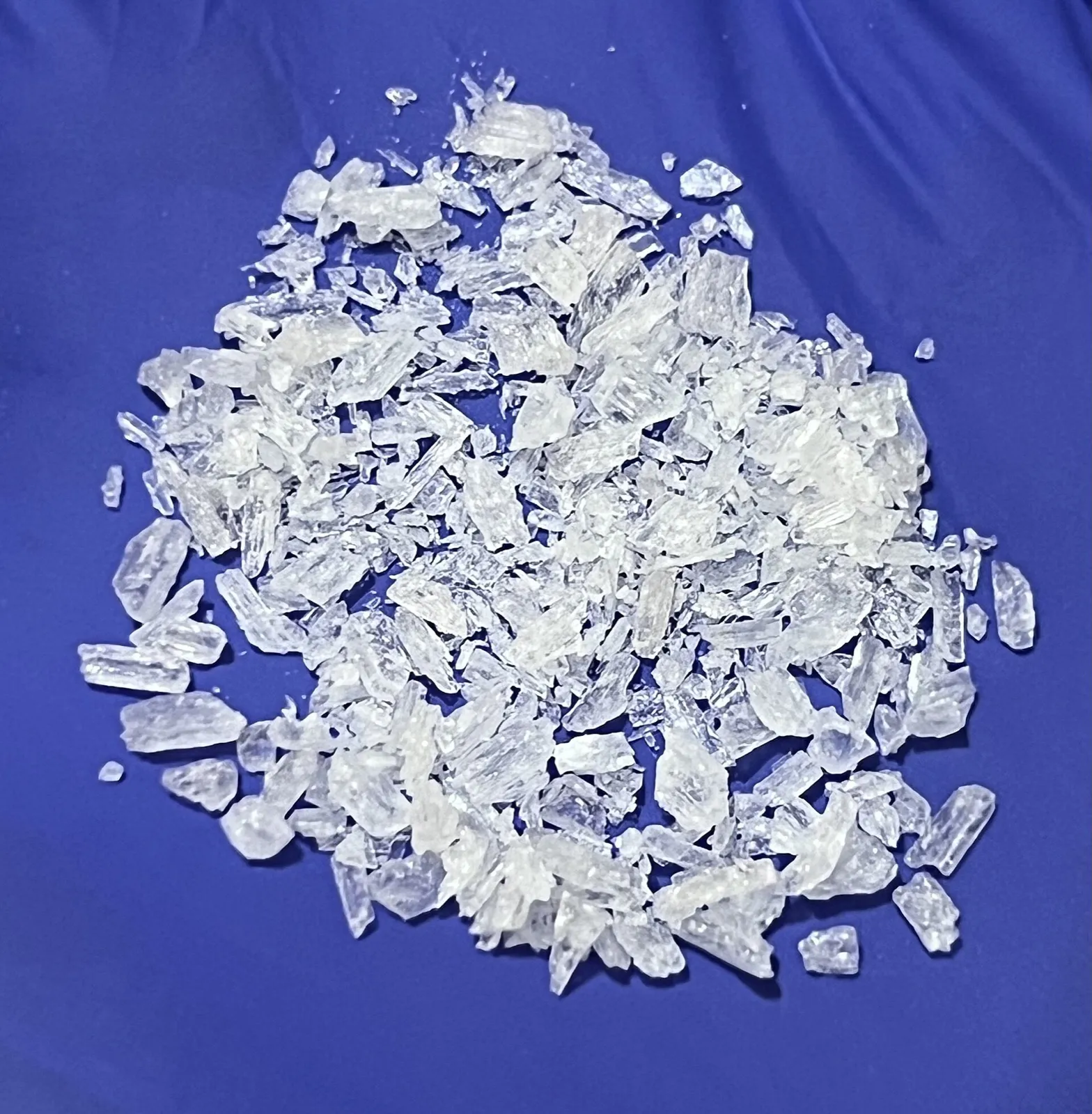
Use is calmer than the headlines suggest. Wastewater testing from 2025 shows methamphetamine still concentrated in Czechia and Slovakia, although it also turns up in Germany, Spain, Cyprus, Lithuania, the Netherlands, Norway and Türkiye. Across Europe the trend compared with 2024 was mixed: of 80 cities with data, 37 saw an increase, 28 a decrease and 15 stayed the same (EUDA). Levels in American, Canadian and Australian cities were still higher than in the European cities with the most meth.
About 14,500 people entered treatment for methamphetamine in 2024, and 92% of them were in Czechia, Germany, Slovakia and Türkiye. In Czechia, Slovakia and Türkiye methamphetamine accounts for more than 30% of everyone entering treatment for the first time. The EUDA also reports methamphetamine smoking in drug consumption rooms around Europe and its role in sexualized drug use, better known as chemsex.
So the picture is this: Europe is becoming a producer of methamphetamine and a transit point for it faster than it is gaining users. I think that is only a matter of time, because wherever a product is plentiful and cheap, customers usually show up. You can see a similar mechanism in the cocaine market, which I describe in my post on cocaine purity, crack and narco-submarines.
My take
The story of Pervitin doesn’t explain the war. It’s interesting for a different reason: it shows how eagerly people reach for a substance that promises they’ll get more done and feel less tired. Nobody had to push Pervitin on the Germans. They went and got it themselves, and a state whose posters preached the health and purity of the nation spent two years failing to bring it under proper control.
The legends about chocolates and a blitzkrieg on a high are popular because they’re simple and a little funny. The truth is more boring and more disturbing. The crimes in Poland and across occupied Europe were committed by people convinced they were in the right, and methamphetamine was an accomplice in that story, not the culprit.
Today meth is returning to Europe, not in pharmacy tubes but by the barrel, from labs in Dutch farmhouses and elsewhere across the continent. It’s worth remembering how it ended last time: addiction, psychosis and a crash that always comes, just never when you expect it.
Sources
- Norman Ohler, Blitzed: Drugs in Nazi Germany (2016; German original Der totale Rausch, 2015); criticism: Richard J. Evans in The Guardian (2016), review in the British Journal for Military History (2017), Roger Moorhouse.
- Łukasz Kamieński, Shooting Up: A Short History of Drugs and War (Oxford University Press, 2016), and his article in War on the Rocks (2016).
- R. J. Defalque, A. J. Wright, Methamphetamine for Hitler’s Germany: 1937 to 1945, Bulletin of Anesthesia History (2011).
- S. Snelders, T. Pieters, Speed in the Third Reich, Social History of Medicine (2011).
- N. Rasmussen, Medical science and the military: the Allies’ use of amphetamine during World War II, Journal of Interdisciplinary History (2011).
- Peter Steinkamp, doctoral thesis on alcohol and drugs in the Wehrmacht, University of Freiburg (2008, in German).
- Jochen Böhler, Wehrmacht crimes in Poland in September 1939, zeitenblicke (2007, in German); War crimes of the Wehrmacht on Wikipedia.
- M. Tamura, Japan: stimulant epidemics past and present, UNODC Bulletin on Narcotics (1989).
- The chocolate myth: Zotter’s statement, The Skeptic (2022).
- EUDA, European Drug Report 2026: synthetic stimulants, drug supply, production and precursors, Europe’s emergence as a producer of methamphetamine and the 2026 wastewater study.
- Images from Wikimedia Commons: Pervitin from the 1940s (Deutschlandmuseum Berlin, CC BY-SA 4.0), Romanian ad (Onkel Dittmeyer, CC BY-SA 4.0), Scho-Ka-Kola (Domi1907, CC BY 3.0), column in Poland, Panzer III crew and bridge over the Meuse (Bundesarchiv, CC BY-SA 3.0 DE), crystal meth (WikiLinuz, CC0).


Questions people ask
What was Pervitin?
A brand-name medicine containing 3 mg of methamphetamine per tablet, launched in German pharmacies by the Berlin company Temmler at the turn of 1937 and 1938. It was marketed against fatigue and low mood, and the Wehrmacht used it to keep soldiers going without sleep.
Did Nazi soldiers take meth?
Yes. In the invasion of Poland in 1939, Pervitin was handed out unofficially by officers and doctors, in unknown amounts. Before the attack on France, an army order of April 1940 set official doses, and tens of millions of tablets went to the troops.
Was Pervitin sold over the counter?
At first, yes, though not in every pharmacy. From November 1939 civilians needed a prescription, and from July 1, 1941 Pervitin fell under the German Opium Law. Soldiers were not covered by those restrictions.
Did the Nazis make chocolate laced with meth?
There is no evidence for it. The ‘Panzerschokolade’ box that circulates online is a modern fake. The real wartime chocolate was Scho-Ka-Kola, which contained caffeine, and ‘Panzerschokolade’ was a soldiers’ nickname for Pervitin tablets.