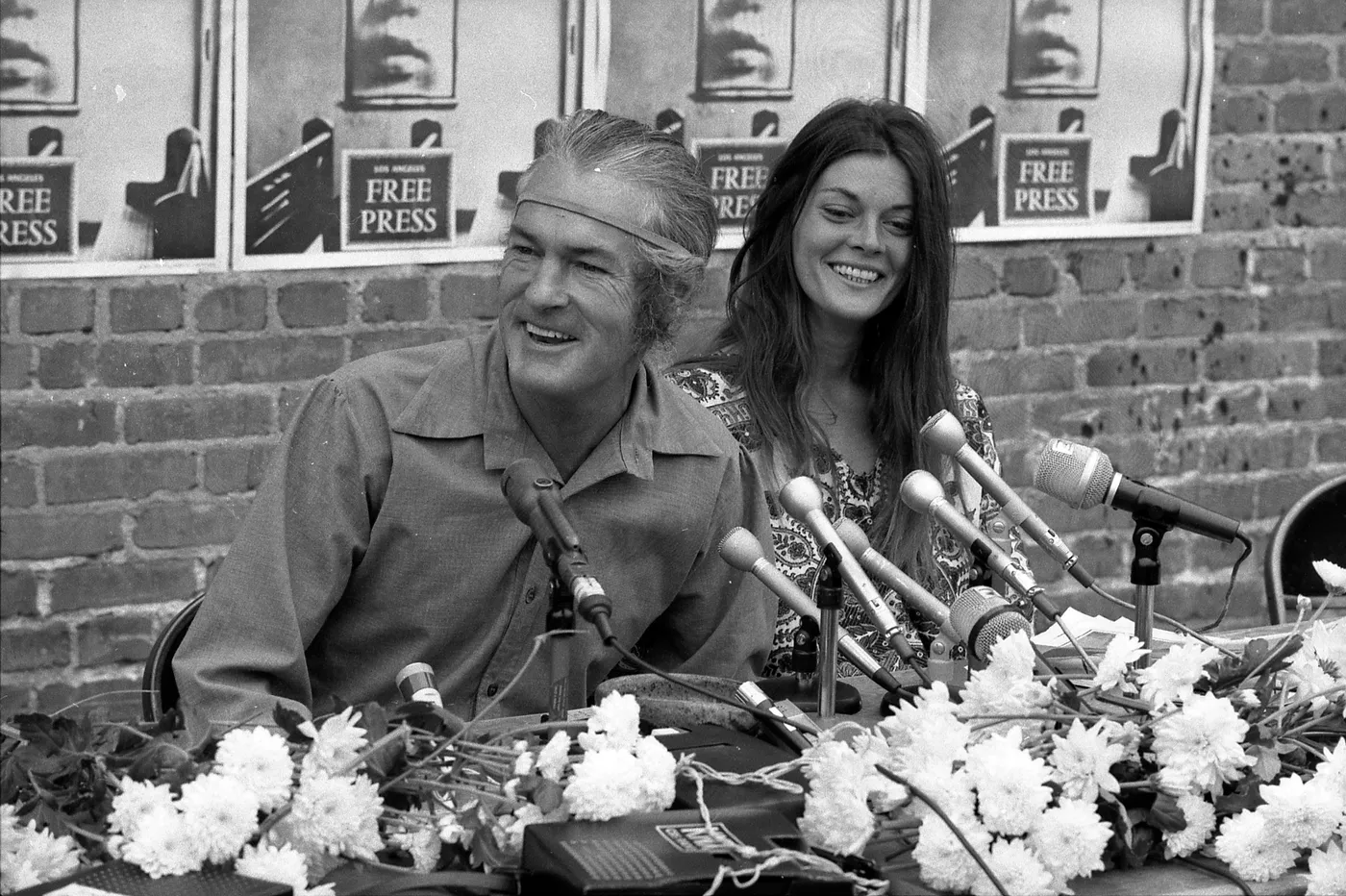
In the late 1960s and early 1970s, American police were fighting a gang that was, on paper, a church. Its members wore their hair long, meditated on foam-rubber floors and believed that LSD would save the world. At the same time they smuggled hundreds of kilos of hashish from Afghanistan, distributed the most famous acid of their era, moved money through Swiss bank accounts and paid for Timothy Leary’s escape from prison. Federal agents claimed they were responsible for half the LSD and hashish in the United States.
They called themselves the Brotherhood of Eternal Love. The police had a shorter name for them: the hippie mafia.
The story also has an ending any screenwriter would be proud of. People close to the Brotherhood wanted to buy an uninhabited Pacific island from France and found the world’s first independent state based on LSD. They chose Clipperton, an atoll where an abandoned Mexican garrison had died out half a century earlier. I tell that story in a separate post on Clipperton Island.
One caveat up front. This is a history piece, not an advertisement. The moral of this story isn’t that drugs save the world. If anything, it shows how quickly idealism turns into ordinary business, and business into trouble. LSD is still illegal almost everywhere, as I explain in my post on LSD, the CIA and Tusko the elephant.
How an Anaheim gang became a church
In the mid-1960s John Griggs and his friends from Anaheim, near Los Angeles, looked nothing like hippies. They were a local car gang. In 1966 they robbed a Hollywood producer at gunpoint and stole his supply of LSD. Griggs decided to try the loot and, as his friends tell it, came out of the experience a different man. He threw away his gun, apologized to the producer and gave back what they had taken. It sounds like the life of a saint, but that is how every source tells it.
The group moved out of town to Modjeska Canyon and began living together. On the advice of Timothy Leary, who was setting up his own psychedelic church in New York at the time, the League for Spiritual Discovery, Griggs registered the Brotherhood as a religious organization. Its articles of incorporation proclaimed “the sacred right of each individual to commune with God,” in spirit and in truth, as that truth was revealed to each of them empirically.
One of the first members, who years later testified before a grand jury, explained what it was really about. Registering as a church was meant to bring a tax exemption on land and, if marijuana ever became legal, on marijuana too. Spirituality, California style. There was one rule for joining the Brotherhood: take as many psychedelics as possible. In October 1966 possessing LSD became a crime in California, so the church was at odds with the law from day one.
Laguna Beach, Woodland Drive and Mystic Arts World
The Brotherhood settled in Laguna Beach, a seaside town south of Los Angeles that drew surfers and young people escaping the cities. They took over several houses on Woodland Drive, a ramshackle street in a canyon with a single streetlight and potholed roads. The police soon started calling the area a drug den.
The group’s shop window was the Mystic Arts World store on the Pacific Coast Highway. At the front it sold what hundreds of similar stores across America sold: health food, handmade clothes, incense and books on spirituality. Real life happened at the back, in a meditation room covered wall to wall with foam rubber and thick carpet, with a small waterfall in the corner. It was the church’s chapel and a drug wholesaler’s office at the same time.
The store never paid its way. At Christmas 1969 it burned down in circumstances nobody ever explained. Nobody shed many tears over it either, because the money had long been coming from somewhere else entirely.
Hashish from Kandahar and Maui Wowie
At first the Brotherhood dealt in marijuana brought in from Mexico. The breakthrough came in the spring of 1968, when a buying trip for the store reached the bazaars of Kandahar in Afghanistan. A kilo of hashish cost $20 there and $2,000 in California. The expedition brought back 50 kilos, and from then on the direction was clear.
The hashish reached California in specially modified cars and in any other place where something could be hidden. Later Hawaii joined in. The Brotherhood set up a base on Maui, from which it smuggled the island’s famous Maui Wowie marijuana, among other ways in cans made to look like local fruit. Members bought land in Oregon, shops in Laguna Beach and ranches in California. The sect in the canyon had turned into an international business with branches from Mexico to Afghanistan.
Orange Sunshine: acid with a mission
Hashish paid the bills, but the Brotherhood’s real mission was LSD. The idea was that everyone should be able to try it, and to try “clean” acid. This is where three men from outside Laguna Beach enter the story.
The first was Billy Hitchcock, a grandson of William Larimer Mellon and an heir to one of the largest fortunes in America. A stockbroker, he met Leary through his sister, and in 1963 he and his brother let Leary use the family estate at Millbrook, New York, for a token $500 a month. Millbrook became the capital of the psychedelic revolution, and Hitchcock became its banker.
The second was Tim Scully, a young physicist and electronics whiz from Berkeley and a protégé of the legendary underground chemist Owsley Stanley. The third was Nick Sand, a chemist who had lived at Millbrook and was known in Leary’s circle as “the alchemist.” Around the turn of 1969 Sand bought a farm in Windsor, Northern California, and Scully set up a laboratory there. According to Tendler and May, Hitchcock put between $100,000 and $200,000 into the venture.
In February 1969, at Hitchcock’s house in Sausalito, Griggs collected the first delivery. By the summer, more than 3.6 million orange tablets, named Orange Sunshine, had come out of Windsor. The Brotherhood distributed them across the United States and abroad. The water towers on the Brotherhood’s ranch were painted orange. The acid quickly became a brand, and the brand a legend.
Timothy Leary, the patron saint on the run
At the end of 1967 Timothy Leary, the former Harvard lecturer and the world’s most famous champion of LSD, moved to Laguna Beach. The Brotherhood regarded him as its spiritual leader, and he happily accepted their hospitality. On December 26, 1968, a local police officer stopped his car and found two marijuana roaches in it. Leary claimed they had been planted. He was sentenced to ten years in prison.
In September 1970 Leary, who had been assigned to garden work at a minimum-security prison, went over the wall along a telephone wire and vanished. On the other side, a car from the radical left-wing Weather Underground was waiting. The Brotherhood paid for the favor: $25,000. The militants smuggled Leary and his wife Rosemary out to Algeria, where they were hosted by Eldridge Cleaver of the Black Panthers. The hospitality ended in house arrest, because Cleaver had had enough of their lifestyle.
Then came Switzerland, Vienna, Beirut and finally Kabul, where American agents arrested Leary on board a plane. Behind bars he agreed to cooperate with the FBI, which his friends saw as betrayal. He was released in 1976.
The first deaths and the end of innocence
The utopia began to crack sooner than anyone expected. In July 1969 a teenage girl, a friend of Leary’s daughter, drowned in a pond at the Brotherhood’s ranch in the mountains near Idyllwild while she was on LSD. A month later John Griggs himself died after taking crystalline psilocybin. Accounts disagree on whether it was contaminated or simply far too strong.
After the founder’s death, power passed to people more interested in business than in enlightenment. Robert Andrist ran the hashish smuggling, and Michael Randall and Nick Sand ran the LSD network. At dealers’ meetings on the ranch, as one guest later recalled, the talk was no longer only about love and consciousness but also about how to “take care of” someone who was causing trouble. The church had turned into a cartel.
An LSD state on Clipperton Island
And here we reach the wildest idea in the whole story. After police discovered Scully’s laboratory in Denver in 1968, he and Hitchcock started thinking about a laboratory abroad, out of reach of American police. First they considered the Bahamas. Then, as Tendler and May describe in their book The Brotherhood of Eternal Love, they pored over an atlas in the Los Angeles office of Scully’s lawyer. The lawyer’s finger stopped on Clipperton, an island so small that on the map it was no bigger than the letter “i” in its name.
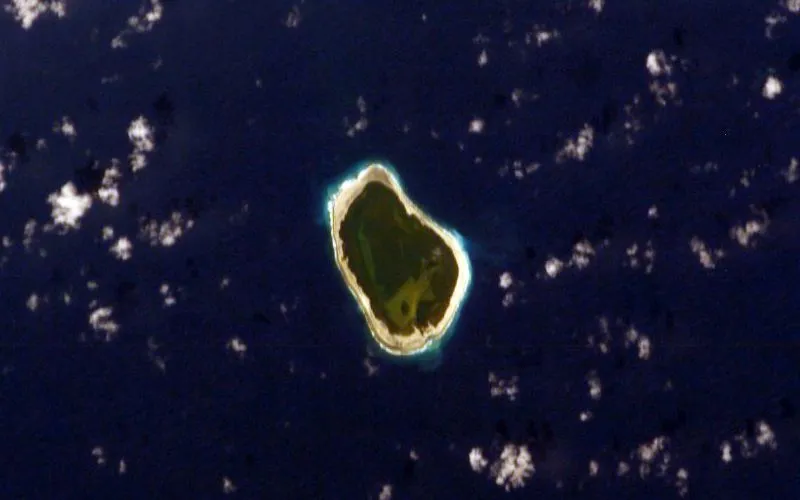
The plan went like this: buy the island from France and declare independence. The new state would be run on the principles of the psychedelic movement and live off the export of substances developed by Scully. Hitchcock would set up a financial system to attract money fleeing the taxman and curious policemen. A tax haven with an acid lab thrown in. As the book’s authors explain, raiding a laboratory in Denver is one thing, and invading an independent island is quite another.
Hitchcock and Scully decided to make France an offer. An emissary was sent to Europe with $2,000 to look into the purchase. No news came back. That was not because the French were dragging their feet. The emissary turned out to be more of a realist than the men who sent him: he took the money and disappeared. There was no second attempt, because it emerged that the French government was planning to set up a research station on the island.
That last detail holds up. In the early 1960s France had looked at Clipperton as a possible nuclear test site, ruled it out and used the island instead for a small mission collecting data on fallout from nuclear tests elsewhere. Between 1966 and 1969 the French military sent a series of missions called “Bougainville,” which unloaded some 25 tons of equipment to keep watch over the island, record the weather and study whether the old wartime airstrip could be reopened (Wikipedia). For the hippies it was a psychedelic promised land. For France it was a military outpost once shortlisted for testing the bomb.
The real irony lies elsewhere, though. Clipperton has no fresh water, no harbor and no soil. Half a century earlier, about a hundred people from a Mexican garrison had failed to survive there for a few years without supplies from the mainland, and only eleven of the whole colony were rescued. That was the promised land to which a few Californian idealists wanted to move a state built on acid.
Operation BEL, the end of the hippie mafia
The Laguna Beach police had their eye on the Brotherhood from the start, but for years nobody in Washington took reports about bearded dealers with a church on the side seriously. That changed in 1972. The federal Bureau of Narcotics and Dangerous Drugs (BNDD), together with state and local police, set up a task force called Operation BEL.
In late July 1972 an Orange County grand jury began hearing the case, with about thirty people on the list for indictment, Leary among them. At 6 a.m. on Saturday, August 5, agents picked up about forty people in California, Oregon and Maui. The district attorney announced that the back of the Brotherhood had been broken. In reality, many of its key people had fled abroad or gone underground.
The decisive blow came from an unexpected direction. In 1973 Billy Hitchcock was indicted for tax evasion; years earlier his wife had stated in divorce papers that he hid drug profits in a Swiss bank. The Mellon heir agreed to cooperate and testified against Scully and Sand. In 1974 both chemists were convicted. Scully got 20 years, Sand 15. The circle that had dreamed of an island state came apart over its bookkeeping.
The last person in the case was arrested only in 2009. It ended with a guilty plea to a single count of hashish smuggling and two months behind bars.
What’s left of it?
The Brotherhood’s story has produced two good books: The Brotherhood of Eternal Love by Stewart Tendler and David May (1984) and Orange Sunshine by Nicholas Schou (2010). There are also two documentaries, The Sunshine Makers (2015) and Orange Sunshine (2016).
Psychedelics, meanwhile, have come back into medicine, though through the back door of laboratories and clinical trials rather than through an incense shop. I write about that at length in my post on LSD and its return to medicine.
My take
I like this story because it gathers in one place everything about the 1960s that was beautiful and stupid at the same time. At the start there are naive boys who throw away their guns after a single trip and want to save the world. At the end there is a cartel with Swiss bank accounts, a dead girl in a pond and the heir to a great fortune who gives up his partners to stay out of prison over his taxes.
The most clear-headed person in the whole tale turned out to be the man who took $2,000 to buy an island and never came back. He was probably the only one who looked at the map and understood that you can’t build a utopia on a lump of coral with no water. The Mexican soldiers and their families learned that the hard way, and the Brotherhood never even noticed.
If the emissary had been honest and France had been willing to sell, we might have a micro-state in the Pacific today with a blotter of acid on its coat of arms. My guess is that it would have ended much like Captain Ramón Arnaud’s garrison on the same atoll, only with better music.
Sources
- Stewart Tendler, David May, The Brotherhood of Eternal Love (1984), full text in the Schaffer Library of Drug Policy. The Clipperton plan is described in chapter six.
- English Wikipedia: Brotherhood of Eternal Love, Tim Scully, William Mellon Hitchcock, Timothy Leary, Clipperton Island.
- Photos from Wikimedia Commons: Leary and Woodruff, 1969 (John Malmin / Los Angeles Times, UCLA Library, CC BY 4.0), Clipperton from the ISS (NASA, public domain), sunset over Clipperton (NOAA, public domain).


Questions people ask
What was the Brotherhood of Eternal Love?
A group of young men from the Los Angeles area who registered in California as a religious organization in 1966 and in practice built one of the largest hashish smuggling and LSD distribution networks in the US. The police called them the hippie mafia. Raids in August 1972 broke the network up.
What was Orange Sunshine?
Orange LSD tablets made in 1969 by the chemists Tim Scully and Nick Sand and distributed by the Brotherhood. More than 3.6 million had been made by the summer of 1969, and they became the best-known LSD brand of the late 1960s.
Did the Brotherhood of Eternal Love try to buy an island?
Yes, although the idea came from two men in its orbit, the financier Billy Hitchcock and the chemist Tim Scully. According to the book by Stewart Tendler and David May, they planned to buy Clipperton Island from France and found an independent LSD-based state there. The emissary they sent to Europe vanished with the money.
How did Timothy Leary escape from prison?
In September 1970 Leary climbed out of a minimum-security prison in California along a telephone wire. The Brotherhood paid the radical Weather Underground $25,000 to drive him away and then help him leave the country for Algeria.