For centuries the Church held a monopoly in Europe on what we would now call motivation: it gave people meaning, purpose and rules for living. Over the last 150 years or so, a whole market of alternatives has grown up beside it. There are other religions, philosophy and psychotherapy, and there are the bookstore shelves marked “Self-Help”, sagging under the weight of motivational books.
Are they worth reading? In my view, yes, but only the ones that teach specific techniques and rest on research rather than slogans. Most of the genre is motivational mush: for two days you want to climb mountains, and on the third everything is back to normal. Below I describe how I came to the genre, what the research says about it, how to tell a good book from a bad one, and which books I think are genuinely worth your time.
My first motivational book: Carnegie and his worries
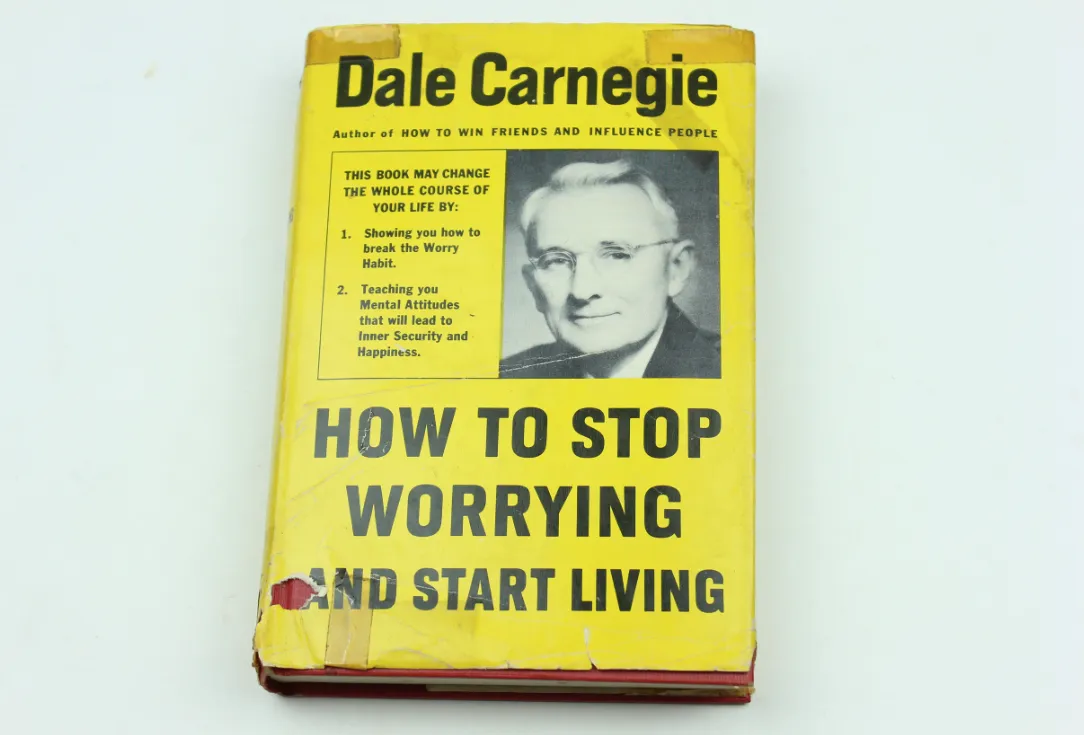
In 2018 I heard about Dale Carnegie’s How to Stop Worrying and Start Living. It came out in 1948, so when I picked it up it was 70 years old. Its age is what sold me, because something that has kept selling for seven decades is unlikely to be complete nonsense. Until then I had steered clear of the self-help shelf.
Carnegie didn’t invent the genre. The Scot Samuel Smiles published Self-Help back in 1859, and Napoleon Hill brought out Think and Grow Rich in 1937. By 1948 Carnegie was already famous for How to Win Friends and Influence People, published in 1936. Still, his book on worry is one of the oldest in the genre that you can read today and get something out of.
I liked it because Carnegie doesn’t tell you to believe in yourself. He gives you concrete ways of dealing with stress and illustrates them with stories of real people, from ordinary office workers to John D. Rockefeller. My favorite method comes from the engineer Willis Carrier, the father of modern air conditioning. First you ask yourself what is the worst that can happen. Then you accept it in your mind. Finally, you calmly set about improving on that worst case.
As a bonus, the book is a slice of American history.
Bad motivational books, or why I put Robbins down
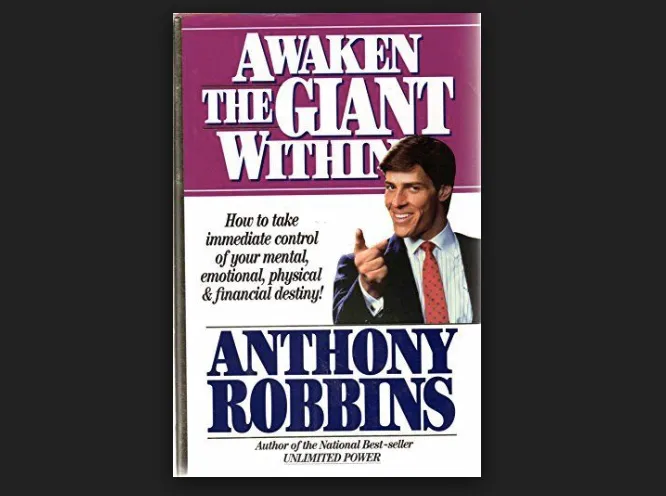
Someone once gave me a book by Tony Robbins, one of the best-known motivational speakers in the world: Awaken the Giant Within. The cover alone put me off. I had a feeling that by chapter four he would be offering me a blender at a special price, and I would rather talk to people than sell them blenders. After a dozen or so pages I gave up, because the way he delivered his advice did nothing for me.
That is my subjective verdict, of course, and Robbins has millions of fans. But so many self-help books come out every year that some of them must be good and some very bad. The trouble is that from the outside they often look identical.
Do motivational books work? What the research says
This is where it gets interesting, because psychologists have tested some of the genre’s favorite tricks:
- Affirmations can backfire. In a 2009 study by Joanne Wood and colleagues, people with low self-esteem who repeated the sentence “I’m a lovable person” felt worse afterward than those who didn’t. The only people it helped, and only a little, were those whose self-esteem was already high.
- Dreaming of success drains energy. Gabriele Oettingen and Doris Mayer showed that positive fantasies about the future went with less effort and worse results, for example among graduates looking for a job. Positive expectations, meaning a sober judgment that success is likely, had the opposite effect.
- Fashionable ideas are often oversold. A meta-analysis of the research on grit found that it is very strongly correlated with plain conscientiousness and only moderately with performance. The growth mindset fared similarly: the overall effects were weak, though mindset interventions may help students from poorer backgrounds or those at risk of failing.
- Good self-help books really do help. A 2017 review found that bibliotherapy, treating depression with the help of the right books, reduced symptoms in adults over the long term, though not in the studies of young people. Bibliotherapy, though, means structured books that teach specific skills, not collections of slogans.
A book helps when it changes what you do, not just how you feel while you read it. If you are struggling with depression, no book replaces a conversation with a doctor or a therapist.
How to tell a good motivational book from a bad one
Over the years I have settled on a few simple criteria. I trust a motivational book more when it:
- Gives specific techniques that I can test within a week, instead of generalities about “the power of the mind”.
- Cites research, not just the author’s life story and the stories of his millionaire friends.
- Admits where its advice doesn’t work. An author who claims his method helps everyone, every time, is selling something.
- Doesn’t promise quick riches. I give a wide berth to any title that tells me how many days it will take to change my life.
- Doesn’t invite me to a paid seminar halfway through. A book that doubles as a seminar flyer is an ad in hardcover.
A little critical thinking goes a long way here. The author’s success doesn’t prove that his method works, because we never hear about the thousands of people who did the same things and got nowhere. We want a guru so badly that we rarely ask about the people his method failed.
Motivational books that I think are worth reading
I first wrote about motivational books in 2018, and that version had no list. I added this one in 2026. It isn’t a bestseller ranking, just my own pick of books that teach something concrete or change the way you think.
- Dale Carnegie, How to Stop Worrying and Start Living (1948). Old-fashioned and full of anecdotes, but with techniques that still hold up. A good place to start.
- James Clear, Atomic Habits (2018). A practical manual for building habits in small steps. Instead of big goals, Clear proposes systems and surroundings that make good choices easier.
- Charles Duhigg, The Power of Habit: Why We Do What We Do in Life and Business (2012). A reporter’s account of how habits form and why they are so hard to change. A good companion to Clear.
- Cal Newport, Deep Work (2016). For anyone who checks their phone every three minutes. It teaches you to protect time for work that needs concentration.
- Viktor E. Frankl, Man’s Search for Meaning (German original 1946, English 1959). A psychiatrist who survived Auschwitz and other Nazi camps writes about what keeps a person going. It is short, and it hits harder than a whole shelf of self-help.
- Daniel Kahneman, Thinking, Fast and Slow (2011). Kahneman promises nothing, but he inoculates you against other people’s promises. The Nobel laureate in economics explains how easily our own brains fool us.
- With an asterisk: Angela Duckworth, Grit: The Power of Passion and Perseverance (2016), and Carol Dweck, Mindset: The New Psychology of Success (2006). Interesting and inspiring, but read them knowing that later research found weaker effects than the authors suggest.
Who should read motivational books?
My impression is that the people who would benefit most from this kind of advice rarely pick these books up. Meanwhile, those who could use a break instead read them compulsively and hop from one method to the next. I used to read Carnegie in public holding it so nobody could see the cover. To this day I don’t know what I was protecting myself from.
Working on yourself matters, but none of us wants to turn into a door-to-door blender salesman. It pays to keep some distance from motivational books, as from most things in life. While we’re on the subject, watch the four-minute clip of Viktor Frankl speaking in Toronto in 1972, now on TED. Borrowing an idea from Goethe, he argues that if you take people as they are, you make them worse, and if you expect more of them, you help them become what they can be. It is motivation that doesn’t pretend to be science and isn’t selling anything.
My take: read, but verify
I think a good motivational book is like a good personal trainer. It shows you the technique and tells you how not to hurt yourself, but it won’t lift the weights for you. A bad book is like a trainer who spends the hour talking about his own successes and then sells you supplements.
If you read one book from my list, make it Atomic Habits. If you read two, add Frankl. And if you finish them and change nothing about your week, don’t blame the author.
Questions people ask
What is the best motivational book?
There isn’t a single best one, because people need different things. I’d start with James Clear’s Atomic Habits if you want to change your daily behavior, and Dale Carnegie’s How to Stop Worrying and Start Living if stress is eating you alive.
Do self-help books actually work?
Some do. Books that teach specific skills, like those used in bibliotherapy for depression, have research behind them. Books built on affirmations and visualizing success can backfire, because positive fantasies about the future go with less effort.
How do you tell a good motivational book from a bad one?
A good one gives you specific techniques you can test within a week, cites research and admits where its advice doesn’t work. A bad one promises quick success, rests entirely on the author’s own story and, halfway through, invites you to a paid seminar.